Weather Patterns and Their Subtle Effects on Goal Totals in European Weekend Fixtures
Written by Willa Fischer · Jul 7, 2026
Weather Patterns and Their Subtle Effects on Goal Totals in European Weekend Fixtures
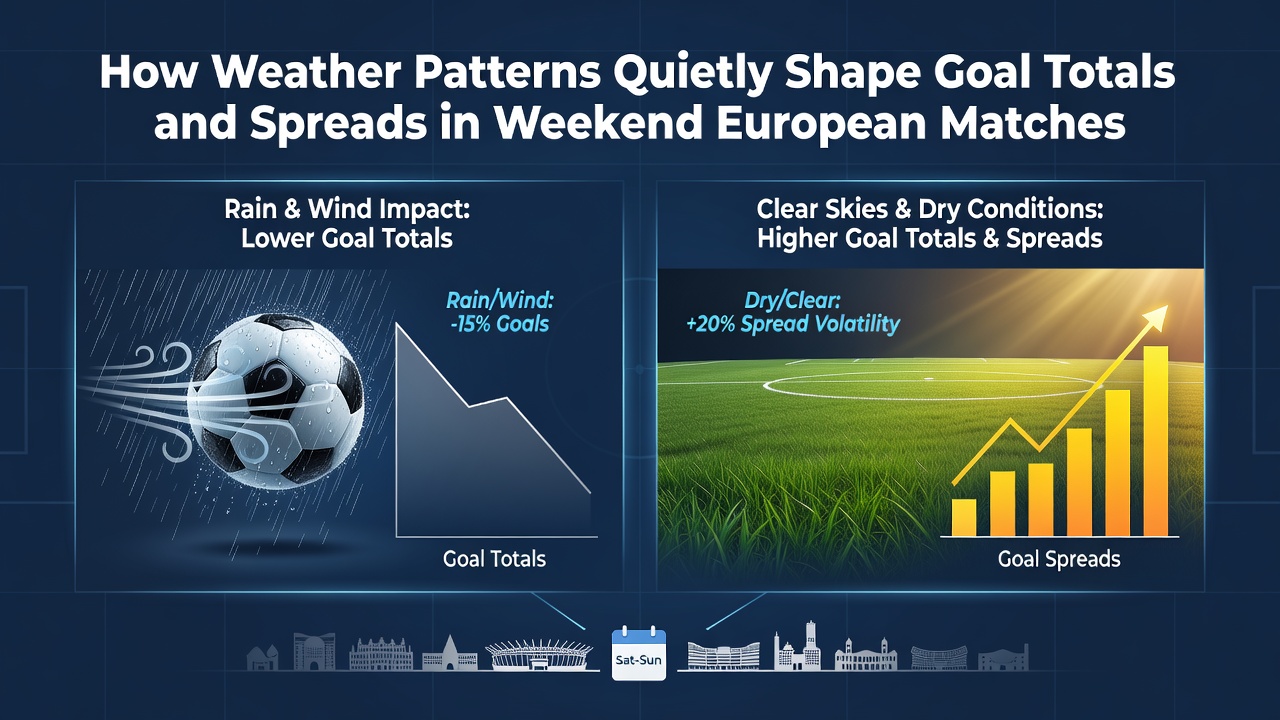
Weather conditions across Europe in July 2026 continue to demonstrate measurable impacts on match outcomes in major leagues, where atmospheric variables influence ball movement, player stamina, and scoring rates during weekend fixtures. Data from meteorological services shows that precipitation levels above 5 millimeters per hour correlate with reduced goal averages in matches across the Bundesliga and Serie A, as wet surfaces slow ball speed and limit high-pressing tactics that typically generate more scoring opportunities.
Observers note how wind speeds exceeding 20 kilometers per hour disrupt long-range passes and set-piece accuracy, which in turn affects both goal totals and betting spreads that bookmakers adjust based on historical patterns from similar conditions. Researchers at institutions tracking European football statistics have documented these shifts through season-long datasets, revealing consistent trends where high winds lead to fewer goals in open-play situations while increasing the likelihood of set-piece conversions.
Temperature Variations and Player Performance Metrics
Temperature fluctuations play a direct role in physical output during weekend European matches, where data indicates that matches played in ranges between 15 and 25 degrees Celsius produce higher goal counts compared to those exceeding 28 degrees. Heat stress reduces sprint distances and recovery times between plays, which analysts connect to lower overall scoring rates in leagues like La Liga during warmer periods. In contrast, cooler conditions allow sustained high-intensity efforts that support more fluid attacking sequences and elevated goal totals.
Those who've examined player tracking data from multiple seasons observe that teams adapt formations in response to these temperature effects, often shifting toward more compact defensive structures in warmer weather to conserve energy, which compresses space and further suppresses scoring chances. This adaptation pattern appears repeatedly in weekend schedules where fixture congestion meets variable summer climates.
Precipitation Effects on Pitch Dynamics and Spread Adjustments
Rainfall amounts reshape pitch conditions in ways that directly influence over-under betting lines, since saturated fields reduce the effectiveness of through balls and quick transitions that drive higher goal outputs. Studies from European sports performance centers have quantified how moderate rain leads to goal averages dropping by approximately 0.4 per match in affected fixtures, prompting oddsmakers to recalibrate spreads accordingly. Heavy downpours amplify this effect by increasing slip risks and forcing more conservative play styles across both home and away sides.
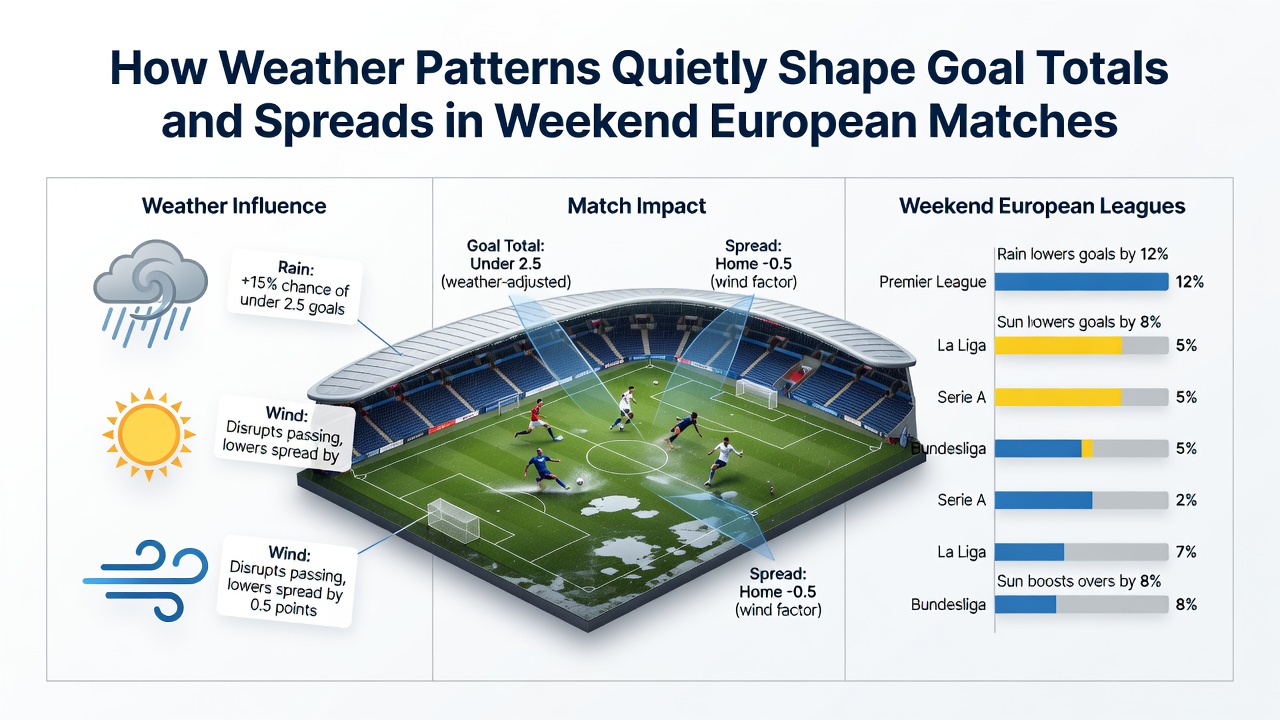
What's interesting is how these precipitation-driven changes extend beyond totals to point spreads, where underdog teams sometimes gain marginal edges through defensive resilience on slippery surfaces that neutralize stronger attacking sides. Figures from league-wide tracking systems reveal this dynamic most clearly in northern European venues during autumn transitions, though similar patterns emerge in July 2026 pre-season friendlies held under comparable conditions.
Wind Patterns and Tactical Adjustments Across Regions
Regional wind variations create distinct challenges for weekend European matches, particularly in coastal areas where gusts alter flight paths of crosses and long clearances. Evidence from performance analysis groups indicates that teams facing consistent crosswinds adjust their strategies toward ground-based build-up play, which tends to lower the total number of scoring attempts and compresses goal margins. This tactical shift shows up consistently in datasets from leagues spanning multiple climate zones.
And yet, the same wind conditions can occasionally boost set-piece success rates when teams exploit altered trajectories, creating pockets of value in specific spread markets. Analysts tracking these variables across multiple seasons have linked wind direction data to measurable changes in expected goal models used by professional betting operations.
Broader Atmospheric Trends in European Football Scheduling
Seasonal weather cycles influence how leagues structure weekend fixtures, with governing bodies considering climate data when finalizing calendars to minimize extreme condition impacts. Reports from international sports federations highlight that matches scheduled during transitional weather periods exhibit wider variances in goal totals, which in turn affects accumulator strategies built around over-under selections.
One case where experts examined multiple European competitions found that humidity levels above 70 percent combined with moderate temperatures produced slower pitch speeds that favored teams with strong technical control, leading to tighter scorelines and adjusted spread calculations. These environmental interactions accumulate across a full weekend slate, creating ripple effects through betting markets that respond to aggregated weather forecasts.
Conclusion
Atmospheric conditions continue to exert quiet but consistent pressure on goal production and spread movements in weekend European matches, as tracked through extensive meteorological and performance datasets. Patterns observed in July 2026 align with longer-term records showing how precipitation, temperature, and wind each contribute distinct influences on match dynamics. Those monitoring these variables across leagues gain clearer perspectives on how weather integrates with tactical and physical factors to shape outcomes without requiring subjective interpretation.