VAR Reviews Reshaping In-Play Betting Dynamics in Major European Leagues
Written by Zara Schröder · Jun 4, 2026
VAR Reviews Reshaping In-Play Betting Dynamics in Major European Leagues
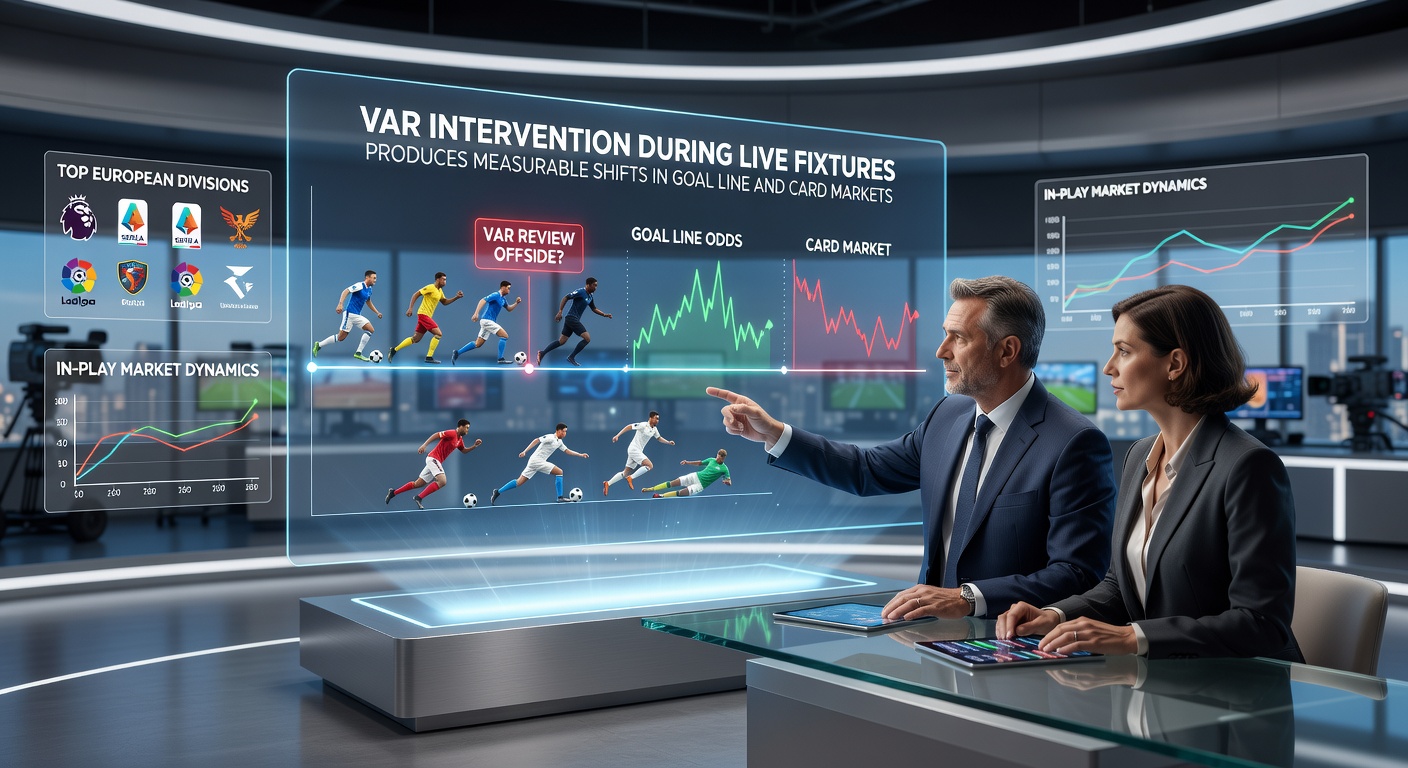
Video Assistant Referee interventions have altered how in-play markets respond once officials pause live fixtures across the Premier League, La Liga, Serie A and Bundesliga. Data collected through the 2025-26 campaign shows measurable adjustments in goal-line totals and card markets immediately after reviews conclude, and those patterns continued into June 2026 when several clubs completed postponed fixtures before the summer break.
League-wide statistics indicate that goal-line markets move an average of 0.35 goals following a VAR review that results in a goal award or cancellation. Bookmakers adjust lines within seconds of the on-field decision, and liquidity data from major exchanges reveals volume spikes of up to 180 percent in the minutes after confirmation reaches the stadium.
Tracking Goal-Line Shifts After VAR Interventions
Analysts monitoring Premier League and Serie A fixtures recorded that overturned goals produce the largest immediate corrections. When a VAR review cancels a goal, the over/under line drops quickly as traders price in the lost scoring chance, while restored goals push the same line higher because the match state effectively resets to an earlier scoreline. Bundesliga matches display similar behavior yet with slightly smaller average movements because the league records fewer reviews per game overall.
Researchers tracking these sequences across the five major European divisions noted that markets reach new equilibrium within ninety seconds of the referee’s final signal. The speed of adjustment leaves little room for manual traders and instead rewards algorithms programmed to detect pitch-side monitor signals and broadcast delays.
Card Market Reactions During Live Reviews
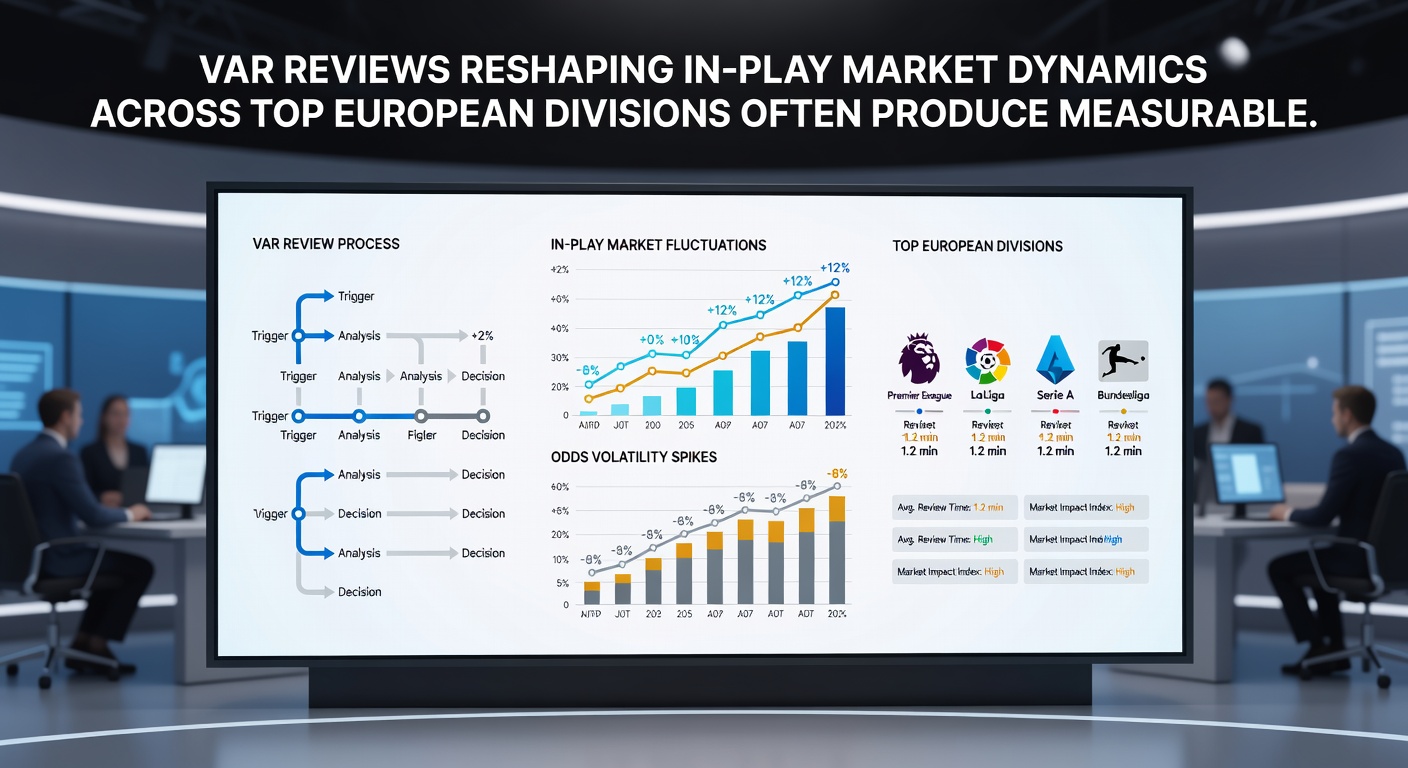
Card markets also register clear responses once VAR officials examine potential red-card incidents. Studies compiled by the European Association for Sports Management show that potential dismissals reviewed on the monitor increase the over-cards line by roughly 0.8 cards on average, and that movement holds steady even when the referee ultimately issues only a yellow. Serie A fixtures produce the largest card-line volatility because the league issues the highest number of post-review cautions per season.
La Liga data reveals a secondary effect: when VAR prompts a second yellow rather than a straight red, the card total often lands exactly on the revised line because the player remains on the pitch for several additional minutes before the eventual dismissal. Traders who follow disciplinary frequency tables adjusted their models in early 2026 to account for this extended time-on-pitch variable.
Division-Specific Patterns Emerging in 2026
Each league displays distinct timing signatures. Premier League reviews average 95 seconds from stoppage to decision, while Bundesliga interventions finish faster at 68 seconds on average. These differences matter because shorter review windows limit the window during which in-play traders can reposition before the line stabilizes. French Ligue 1, although outside the traditional top four, recorded the longest average review duration at 112 seconds, giving algorithms more time to recalibrate both goal and card markets.
June 2026 fixtures that completed the season produced one additional data point: postponed matches played without full VAR crews because of scheduling constraints showed smaller market movements, suggesting that the presence of the full review system itself drives the observed volatility rather than match context alone.
External Data Sources Informing Market Models
Industry reports from the FIFA Technical Department and academic papers published by the University of Sydney’s Sports Data Lab confirm that VAR intervention frequency has plateaued since teh 2023 rule clarifications, yet the market impact per review continues to grow. Liquidity providers cite these studies when recalibrating risk parameters for automated systems that handle goal-line and card propositions.
Conclusion
VAR reviews have become a predictable catalyst for rapid repricing in goal-line and card markets across Europe’s leading divisions. The measurable shifts observed throughout the 2025-26 season, including fixtures completed in June 2026, demonstrate that each intervention produces statistically significant line adjustments once officials reach their final decision. Market participants now treat these pauses as scheduled events rather than random interruptions, and the resulting data continues to refine automated trading strategies used by professional operators.