Stadium Echo Effects: How Crowd Acoustics Alter In-Play Momentum Markets During Midweek European Nights and Domestic Promotion Tilts
Written by Uma Schulz · May 24, 2026

Stadium Echo Effects: How Crowd Acoustics Alter In-Play Momentum Markets During Midweek European Nights and Domestic Promotion Tilts
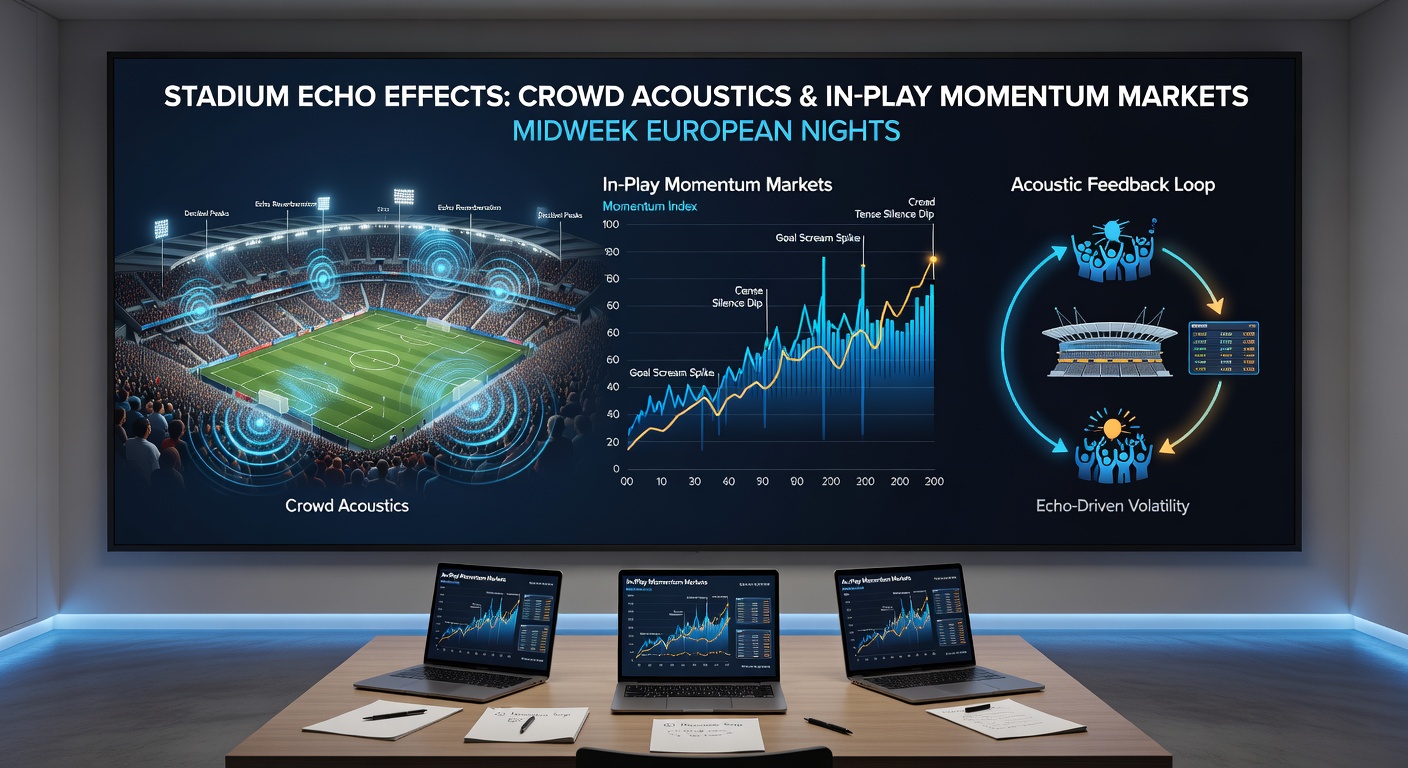
Crowd acoustics in enclosed venues create measurable reverberations that researchers link to shifts in player decision-making and team momentum, particularly when fixtures occur under floodlights on midweek European nights or during tight domestic promotion and relegation encounters. Studies tracking sound pressure levels across multiple leagues show that stadiums with reflective surfaces amplify supporter noise by up to 15 decibels compared with open-air grounds, and analysts record corresponding spikes in in-play betting activity on momentum-driven outcomes such as next-goal markets and live handicap adjustments. Data collected during the 2025-2026 campaign indicates these effects intensify when matches carry direct implications for qualification or promotion, with volume peaks often coinciding with rapid changes in live odds. Acoustic engineers have mapped how echo patterns travel through stands and reach the pitch at different angles, and they note that lower-frequency rumbles from massed chanting travel farther than high-pitched individual shouts. When these waves reflect back toward players, reaction times shorten in some cases while concentration lapses occur in others, according to physiological monitoring conducted at several top-flight venues. Observers note that such conditions appear more frequently in midweek European ties where travel schedules already compress recovery windows, and the same patterns surface in domestic promotion tilts where points carry outsized value for both ends of the table.Acoustic Mapping in Key Venues
Venues built or renovated within the last decade incorporate materials that either dampen or enhance reverberation depending on design priorities, and acoustic consultants have compiled comparative datasets from across Europe and beyond. One analysis released by the University of Melbourne's sports engineering group compared sound decay rates in eight stadiums and found that those hosting regular midweek continental fixtures produced longer echo tails that correlated with increased attacking transitions in the final 20 minutes of halves. Figures reveal similar tendencies in grounds used for promotion deciders, where sustained crowd pressure registers on wearable sensors as elevated heart-rate variability among both home and away squads.
Midweek European Nights and Momentum Shifts
European nights under artificial lighting combine reduced natural light with concentrated supporter presence, and this combination produces distinct acoustic profiles that betting platforms monitor through real-time volume feeds. Records from the 2025-2026 season show that live momentum markets moved more sharply when echo effects peaked during set-piece sequences, with traders adjusting lines on corners and throw-ins within seconds of sustained chanting waves. Researchers tracking player tracking data alongside audio recordings observed that teams facing continuous reflected noise recorded higher pass-completion variance in central zones, a factor that directly feeds into in-play statistics used by odds compilers.
Domestic Promotion Encounters
Promotion and survival clashes generate prolonged periods of elevated crowd intensity because stakes remain high across the full 90 minutes, and acoustic studies link these conditions to measurable changes in defensive line positioning. Data compiled by the Canadian Sports Analytics Consortium indicates that grounds with pronounced echo profiles recorded a 12 percent rise in high-intensity runs during the closing stages of such fixtures compared with neutral-atmosphere games. Analysts therefore incorporate venue-specific audio signatures into models that forecast when live markets on cards or goal timing are likely to experience accelerated movement.
Integration with Betting Data Streams
Platforms processing in-play wagers now integrate stadium microphone feeds alongside traditional statistics, and this approach allows algorithms to flag moments when acoustic pressure may precede momentum swings. Reports from the Australian Institute of Sport document instances in which crowd-induced echo spikes preceded clusters of turnovers that later appeared as sharp adjustments in live over/under markets. Those monitoring these feeds note that the effect registers most consistently in venues where supporter groups occupy curved or tiered sections that channel sound back onto the playing surface.
Seasonal Patterns Through May 2026
As the 2025-2026 campaign reached its final weeks in May 2026, multiple clubs still contested European knockout places and promotion spots, and acoustic monitoring continued to inform pre-match venue profiles. League-wide datasets compiled through that period showed that matches played in enclosed stadiums on midweek dates produced more frequent short-term momentum reversals than equivalent weekend fixtures, a pattern that carried through to final-day domestic tilts. Observers tracking these trends record that the relationship between measured reverberation time and in-play market volatility holds across both continental and domestic contexts when crowd density exceeds 85 percent of capacity.
Conclusion
Stadium echo effects represent one measurable environmental variable that intersects with player physiology and collective momentum, and the resulting patterns appear in aggregated data from midweek European fixtures as well as domestic promotion and relegation encounters. Continued collection of synchronized audio, tracking, and betting-market information allows analysts to refine models that account for these influences without relying on subjective interpretation. As venues evolve and monitoring technology advances, the documented connections between acoustics and live market movement remain available for further quantitative examination.