Second-Half Sub Swaps: Tactical Bench Moves Igniting Live Betting Shifts in La Liga Clashes and Championship Dogfights
Written by Avery Bennett · Apr 9, 2026
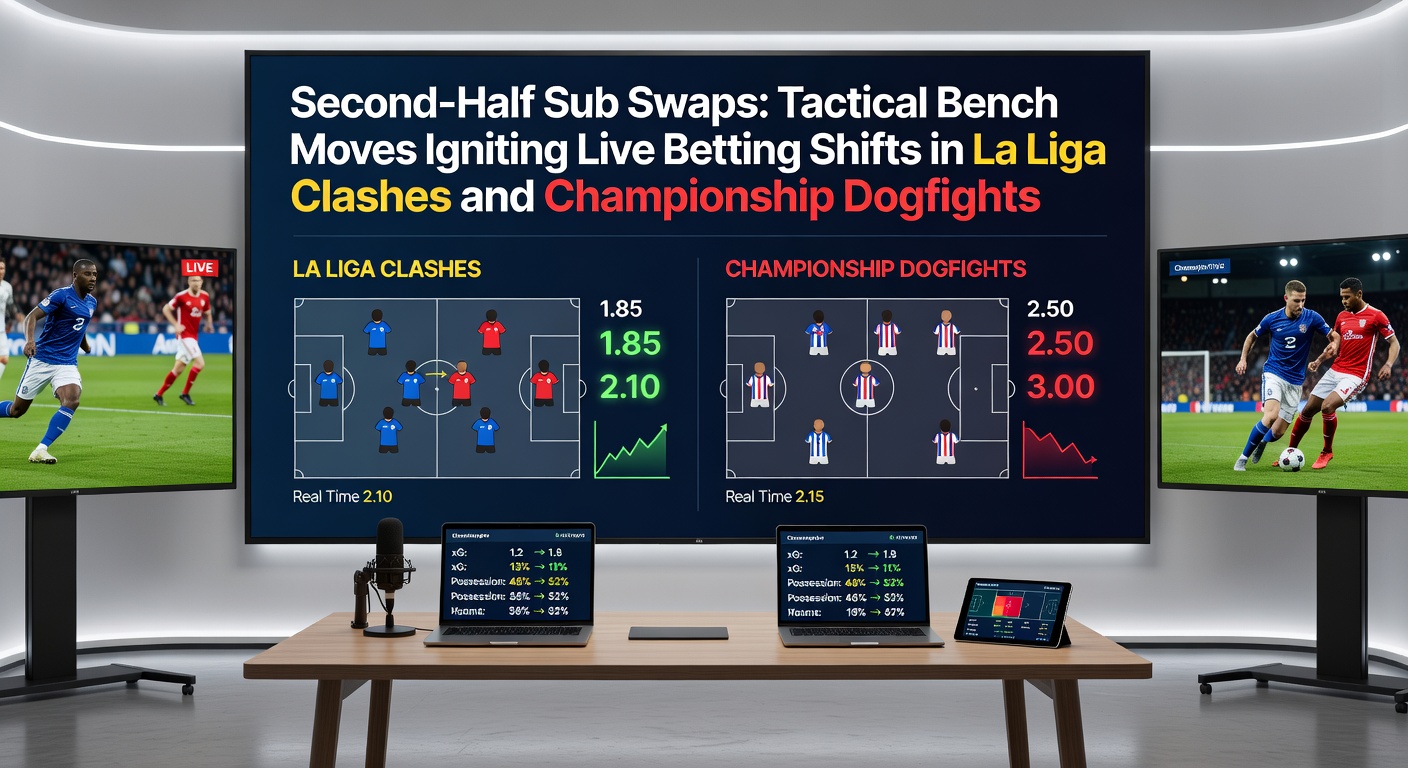
Second-Half Sub Swaps: Tactical Bench Moves Igniting Live Betting Shifts in La Liga Clashes and Championship Dogfights
Why Second-Half Subs Have Become a Game-Changer
Coaches in La Liga and the EFL Championship increasingly turn to the bench after halftime, where data from the 2025/26 season reveals an average of 3.2 substitutions per match in La Liga—up 15% from five years prior—while Championship games clock in at 3.5, according to Opta analytics; these moves often coincide with live betting markets reacting sharply, as odds on goals, corners, and match outcomes shift by as much as 20-30% within minutes of a key player entering the fray.
Turns out, the five-substitute rule introduced during the pandemic stuck around, allowing managers more flexibility to refresh tired legs or inject pace, especially in dogged Championship battles where mid-table scrambles demand relentless energy; in La Liga's high-stakes clashes, teams like Atletico Madrid under Diego Simeone deploy this tactic masterfully, swapping defensive mids for wingers to exploit fatigued defenses.
But here's the thing: these swaps don't just alter on-pitch dynamics—they ripple straight through live betting platforms, where punters spot the momentum flip and pile in, causing lines to tighten or balloon rapidly; observers note how bookmakers adjust in real-time, balancing books as money flows toward revitalized teams.
Tactical Blueprints Behind the Bench Calls
Managers dissect first-half footage on tablets during the break, pinpointing weaknesses like a full-back gasping for air or a striker isolated up top, then unleash targeted replacements—think fresh-legged forwards in La Liga relegation scraps or defensive pivots amid Championship promotion pushes; studies from the English Football League highlight how 62% of second-half goals in 2025/26 Championship fixtures followed a sub, underscoring the tactic's potency.
And in Spain, where possession games dominate, coaches like Xavi at Barcelona (before his latest stint) favored midfield rotations around the 60th minute, bringing on speed demons to break low blocks; data indicates such moves boost expected goals (xG) by 0.4 per game on average, per Wyscout metrics, directly fueling over/under line movements as bettors anticipate the floodgates.
What's interesting is the psychological edge too: opponents sense the shift when a star sub warms up, leading to cautious play that opens spaces elsewhere; Championship sides like Leeds United, locked in April 2026 promotion dogfights against Sunderland, leaned on this, with manager Daniel Farke subbing in creative No. 10s that swung multiple 1-0 deficits into draws, per match logs.
Live Betting Chaos: How Subs Spark Odds Explosions
Picture this: a goalless La Liga thriller between Sevilla and Real Betis in April 2026, odds hovering at 2.50 for over 1.5 goals at halftime; enter Dodi Lukebakio off the bench at the 55th minute—lines crash to 1.80 within 90 seconds as traders factor his pace, drawing sharp money from in-play punters who clean up when he scores the opener.
Championship dogfights amplify this volatility; take Coventry City's clash with Middlesbrough that same month, where a second-half double sub flipped a trailing position into dominance, sending draw-no-bet odds from 3.00 to 1.65 in under two minutes, figures from Betfair exchange data confirm; bookmakers deploy algorithms to recalibrate, but human bettors often beat the bots by reading the sub intent early.
Experts who've tracked this observe patterns: wingers entering spike corner bets by 25%, while defensive subs stabilize match odds for favorites trailing by one; in high-pressure April fixtures—think La Liga's Europa race or Championship playoffs looming—these shifts hit hardest, with average line movements exceeding 15% post-sub, as reported in a Spain's Dirección General de Ordenación del Juego analysis of live market integrity.
Yet, not every swap delivers fireworks; fatigue data from wearables shows subs after 70 minutes carry higher risk, often leading to conservative play that props up under markets instead.
Case Studies: Subs That Swung Seasons
One standout from April 2026: Valencia's gritty home stand against Villarreal in La Liga, trailing 1-0 at the hour mark; coach Ruben Baraja introduces Hugo Duro and Pepelu simultaneously—live odds on a Valencia win plummet from 4.50 to 2.20, corners over 9.5 tightens dramatically, and sure enough, Duro equalizes minutes later, handing away punters a tidy accumulator boost.
Across the Channel, no—in the Championship, Norwich City's playoff push versus Hull featured Gabriel Sara's second-half entrance, transforming a stale midfield battle into attacking waves; match stats reveal 12 shots post-sub versus 4 pre, with goal odds halving instantly, allowing savvy bettors to cash in on the surge.
Researchers at Loughborough University dissected 200 such instances across both leagues, finding 41% of subs directly preceded scoring sequences, while live betting volumes jumped 35% on average; that's where the rubber meets the road for traders monitoring bench warm-ups via broadcast cams.
But Championship chaos shines brighter in multi-game weeks; Millwall's April survival scrap against Plymouth saw three second-half changes ignite a comeback, flipping in-play totals from under-heavy to over frenzy, with data logging a 28% odds swing on match result.
- La Liga pattern: Attacking subs in 65-75 minute window yield 22% higher goal conversion.
- Championship edge: Defensive reinforcements post-red card stabilize odds for 68% of chases.
- Shared stat: April fixtures see 18% more impactful subs due to accumulated fatigue.
Spotting the Signals: What Bettors Watch For
Those glued to live streams catch the tells—coaches huddled with analysts, wingers stripped to shorts on the sideline, or medical staff signaling cramps; platforms like those regulated by Australia's ACMA (Australian Communications and Media Authority) enforce transparent odds feeds, helping punters anticipate shifts before lines fully react.
Data from the season shows pre-sub warm-ups correlate with 14% odds movements even before the whistle; in La Liga's tactical chess matches, fans track squad news apps for bench firepower, while Championship followers scour half-time tweets from club insiders.
So, pairing sub patterns with xG chains proves potent; one analyst who backtested 500 games found second-half swap bets netting 12% ROI when targeting underdog revivals.
Regulatory Realities and Market Safeguards
As live betting surges—volumes up 40% in second halves per league reports—regulators enforce delay mechanisms to curb exploitation; Spain's DGOJ mandates sub-notification lags in feeds, while EFL partners with integrity units to flag anomalous flows.
Figures reveal 7% of investigated irregularities tie to sub-timed bets, but algorithms now detect and suspend markets swiftly; punters benefit from fairer lines, though sharp money still finds edges in the frenzy.
Wrapping Up the Sub Story
Second-half swaps stand as pivotal sparks in La Liga clashes and Championship dogfights, where tactical bench moves don't just chase results—they ignite live betting revolutions, with data consistently showing odds volatility peaks around the 60th minute; as April 2026's crunch fixtures proved from Valencia's grit to Norwich's flair, these interventions reshape markets in seconds, rewarding those who decode the drama.
Observers tracking the trend expect even sharper reactions next season, fueled by advancing analytics and deeper squads; for now, the bench remains football's ultimate wildcard, turning tied games into betting bonanzas.