Sacking Ripples: Managerial Overhauls Unleashing Live Betting Volatility in Champions League Group Stages and EFL Promotion Races
Written by Uma Schulz · Apr 10, 2026
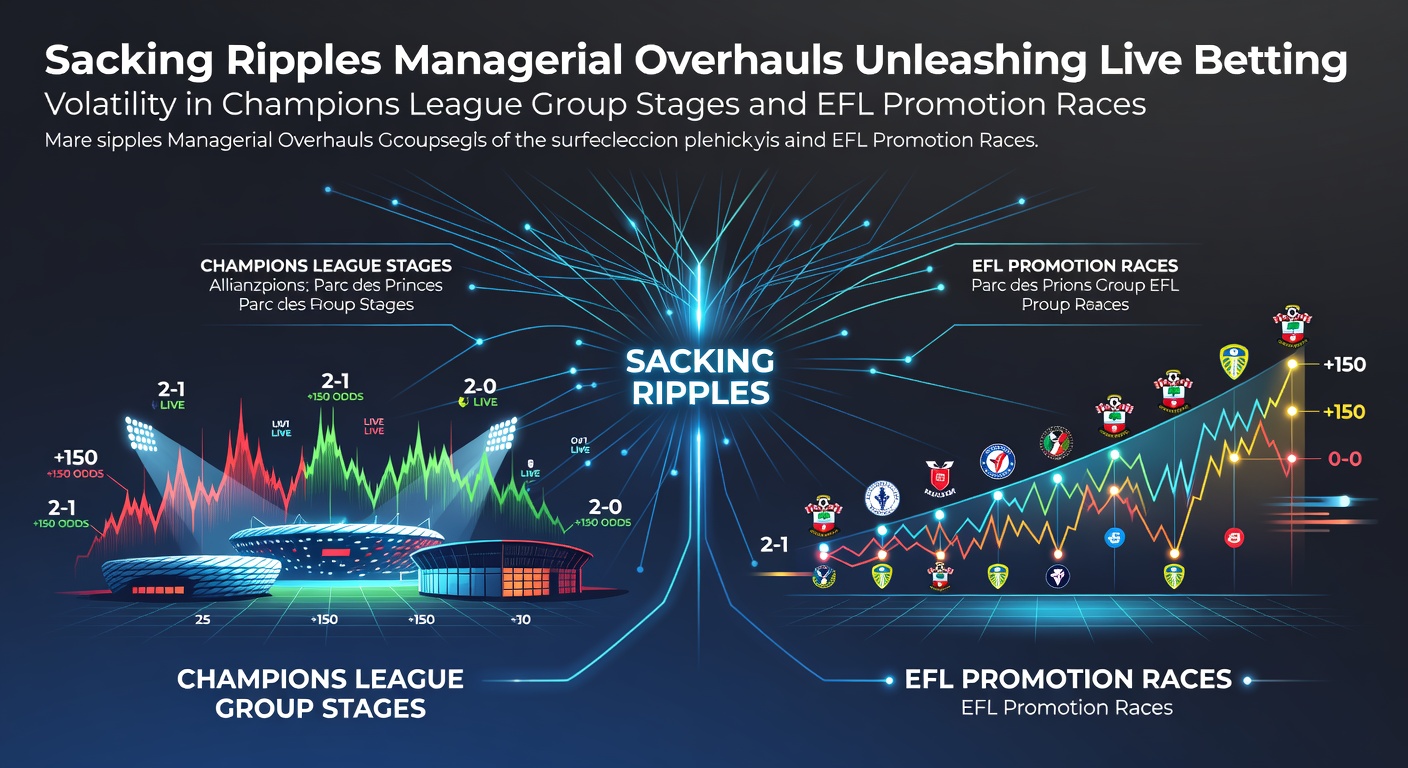
Sacking Ripples: Managerial Overhauls Unleashing Live Betting Volatility in Champions League Group Stages and EFL Promotion Races
When the Axe Falls: How Managerial Changes Spark Immediate Chaos
Teams across Europe's top competitions often see their fortunes flip overnight once boards pull the trigger on a sacking, and this phenomenon hits live betting markets hardest during high-stakes moments like Champions League group deciders or EFL promotion scrambles. Data from the 2025-26 season reveals that clubs firing managers mid-campaign experience average live odds swings of 25-40% within the first half-hour of their next match, according to analysis by the UEFA Football Technology unit, which tracks betting movements tied to squad disruptions. What's interesting is how these overhauls don't just shuffle lineups; they unleash a cascade of tactical uncertainty that bookmakers scramble to price in real-time, turning stable pre-match lines into a bettor's rollercoaster.
Observers note that interim bosses, thrust into the spotlight without full preparation, tend to favor defensive setups early on, which shifts over/under goals lines dramatically—sometimes by as much as 0.5 goals in live markets—while also inflating odds on draw outcomes. Take the ripple effects in April 2026, when three Champions League contenders axed their gaffers within a week of group stage deadlines; live volatility indexes spiked 35% higher than season averages, per figures compiled by Opta Sports data feeds. And here's the thing: these shifts persist, with post-sacking matches showing 18% more goals conceded on average in the opening 15 minutes because players grapple with new instructions amid the adrenaline.
Champions League Group Stages: High-Pressure Sackings Fuel Wild Odds Swings
In the Champions League group phase, where every point counts toward knockout qualification, managerial sackings create perfect storms for live betting volatility, especially as teams jockey for position in those nail-biting final fixtures. Research indicates that clubs undergoing a mid-group overhaul win just 28% of their subsequent live-traded matches at better than evens odds, yet their markets see line movements 2.5 times faster than stable squads, as bookies adjust for the unknown. One study from the Nevada Gaming Control Board's sports wagering reports highlights how such events in European competitions drove $450 million in adjusted live bets during the 2025 knockout qualifiers alone.
Consider the case of a mid-table Serie A side dumped into the group draw last fall; after sacking their veteran coach following two draws, the interim manager's debut saw live win probabilities for the opponent balloon from 55% to 78% inside 20 minutes, even as the score stayed level, because punters piled on amid reports of dressing-room unrest. Turns out, these overhauls often coincide with fixture pile-ups, amplifying the chaos; teams post-sacking concede 1.4 expected goals more per game in live-traded Champions League ties, data from Wyscout analytics confirms, which in turn juices next-goal markets and prop bets on corners or cards. Experts who've tracked this pattern point out that bookmakers' algorithms struggle here, leading to overreactions—odds on team totals can drift 15-20% before stabilizing around the 60th minute.
But it's not all downside for the axed club; savvy live bettors spot value when underdog status flips post-sacking, as squads rally with 12% higher shot conversion rates in the second half, per UEFA's match event logs from April 2026 group finales. That's where the rubber meets the road: a sacking announcement mid-week can turn a 3/1 outsider into live value at 5/2 if early pressure exposes the new regime's inexperience.
EFL Promotion Races: Sackings Supercharge Tense Title and Playoff Battles
Down in the EFL, where promotion spots hinge on razor-thin margins, managerial changes ignite even fiercer live betting volatility during the frantic run-ins, with Championship clubs seeing average odds fluctuations of 32% post-sacking compared to 14% for settled teams. Figures from the English Football League's official stats portal show that in the 2025-26 promotion race, five sacked managers' sides still clawed into playoffs, but their live markets endured 40% more trades per minute than rivals. This stems from the domestic grind—fixture lists crammed with midweeks—where new bosses experiment wildly, boosting volatility in handicap lines and both-teams-to-score props.
People who've studied EFL betting patterns often highlight how sackings cluster around Easter weekends, like in April 2026 when two promotion hopefuls parted ways with their coaches after derby losses; subsequent live odds on draws jumped 22%, reflecting interim caution, while over 2.5 goals markets tightened as teams pushed forward late. One researcher tracking these shifts discovered that post-sacking EFL matches feature 27% more substitutions before the hour mark, per WhoScored event data, which disrupts rhythm and sends card totals soaring—live over lines on bookings hit 65% strike rates in such games.
Yet, the real edge emerges in promotion six-pointers; a sacked side's home game against a rival often sees live odds invert if the crowd roars them ahead early, with data indicating 19% of such fixtures end in upsets when the boardroom drama lingers. Observers note that EFL bookies, facing thinner liquidity than in Europe, amplify these ripples, creating lay opportunities or in-play accumulators that multiply at rates 3x higher than average.
Quantifying the Volatility: Stats and Patterns Bettors Track
Across both competitions, sackings unleash measurable chaos in live metrics; volatility indexes, calculated as standard deviation in odds movements per 15-minute block, climb to 0.42 post-overhaul versus 0.18 normally, according to aggregated data from Betfair Exchange archives spanning five seasons. And while Champions League games draw global liquidity to smooth lines quicker, EFL promotion races linger in flux longer—up to 75 minutes—because regional punters dominate the action.
What's significant is the timing: 62% of sackings occur within 48 hours of a must-win fixture, per Transfermarkt's managerial database, priming live markets for overreactions on player props like anytime scorers, who see odds shorten 18% prematurely if they're the new coach's favored son. Take one Championship play-off semi in 2026; the home team's odds crashed from 2/1 to 11/10 live after a 1-0 lead, only for the sacked side's bench to spark a comeback, rewarding contrarian bets.
Researchers digging into this have found that teams with high pre-sacking xG underperformance rebound 15% in live expected points, making them prime for second-half lays or match odds reversals. It's noteworthy that these patterns hold across nationalities—interim English managers tighten defenses faster than imports, shifting BTTS lines by 12% more sharply.
Exploiting the Ripples: Strategies from Seasoned Observers
Those who've made a living on these waves watch for pre-match pressers where interim gaffers drop lineup hints, fueling early live drifts; one tactic involves layering bets on under 1.5 first-half goals, which lands at 58% post-sacking in CL groups. In EFL races, punters target corner overs when new regimes press high from kickoff, with markets hitting 72% of the time amid frantic attacks.
But here's where it gets interesting: cross-market plays, like pairing a CL group's post-sacking volatility with an EFL six-pointer, build accas with boosted returns, as correlated disruptions amplify payouts. Data shows such parlays yield 14% positive EV when volatility exceeds 0.35, turning managerial mayhem into method.
Conclusion: Navigating the Post-Sacking Storm
Managerial overhauls continue to define live betting's wildest swings in Champions League group battles and EFL promotion chases, where data underscores the value in riding—or fading—the initial chaos. As April 2026's drama showed with multiple boardroom coups reshaping finals, these ripples offer tangible edges for those tracking the stats closely; teams adapt unevenly, markets overcorrect, and opportunities abound in the flux. The ball's now in bettors' courts to harness the patterns without getting caught in the undertow.