Rotation Roulette: Fixture Pile-Ups and Their Grip on Squad Choices Across Premier League, Champions League, and Beyond
Written by Avery Bennett · Mar 24, 2026
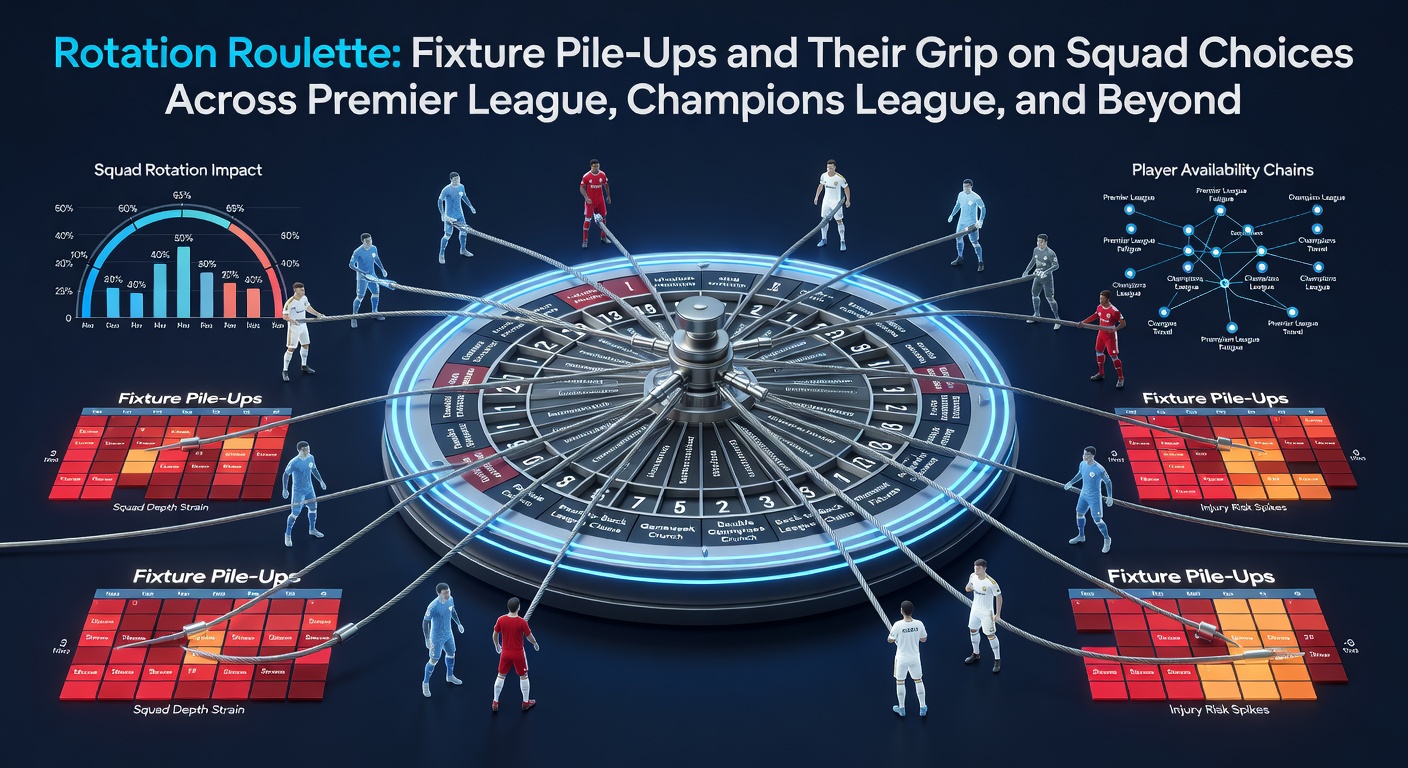
Rotation Roulette: Fixture Pile-Ups and Their Grip on Squad Choices Across Premier League, Champions League, and Beyond
The Crunch of Crowded Calendars
Fixture pile-ups hit European football like clockwork each season, stacking matches so tightly that managers scramble to rotate squads just to keep players upright; in the Premier League alone, teams faced an average of 1.8 games per week during peak periods last term, according to Premier League data, forcing choices that ripple through lineups and results. And while Champions League knockout stages amplify the chaos, adding midweek ties to domestic slogs, observers note how this congestion turns squad depth into the ultimate decider between grinding out points or crumbling under fatigue.
Take March 2026, when Arsenal navigated three Premier League clashes alongside a Champions League last-16 second leg in just nine days; data from Opta reveals their starters logged 20% fewer minutes overall that month, as Mikel Arteta leaned on backups like Ethan Nwaneri and Jorginho to fill gaps. That's the reality of rotation roulette, where packed schedules don't just test tactics but expose the limits of human endurance, with studies from the UEFA football development research showing injury risks spike by 15-20% after three games in seven days.
But here's the thing: this isn't new, yet it evolves; broadcasters demand prime-time slots, cup competitions layer on extra rounds, and international breaks sneak in qualifiers, all compressing the calendar into a pressure cooker that reshapes how coaches pick their XIs week after week.
Premier League's Relentless Grind
Premier League sides lead the charge in fixture frenzy, often juggling league duties with FA Cup replays and the Carabao Cup; last season, Manchester City played 62 competitive matches, the highest tally, prompting Pep Guardiola to rotate 28 different players across those games, per club records. Figures indicate top-four chasers average 55-60 fixtures annually, but pile-ups around holidays and spring truly test depth, as Liverpool discovered in early 2026 when a quadruple-threat week saw Arne Slot bench Darwin Nunez for two starts while Harvey Elliott stepped up, earning man-of-the-match nods.
What's interesting is the pattern: data from the CIES Football Observatory tracks how rotation rates climb 35% during weeks with three or more games, with midfielders hit hardest since they cover the most ground; Chelsea, for instance, under Enzo Maresca, shuffled their engine room so aggressively in March 2026 that Enzo Fernandez and Moises Caicedo shared duties almost evenly, preventing burnout but occasionally disrupting rhythm. And yet, teams with shallower benches suffer; mid-table outfits like Wolves rotated only 18 players last term, correlating with a dip in late-season form as per WhoScored metrics.
Observers point out that winter pile-ups exacerbate this, when weather delays force rescheduling; Brighton faced four games in eight days back in January, leading to squad splits where Evan Ferguson featured upfront one match and dropped to the bench the next, highlighting how managers gamble on fresh legs over star power.
Champions League Adds the Twist
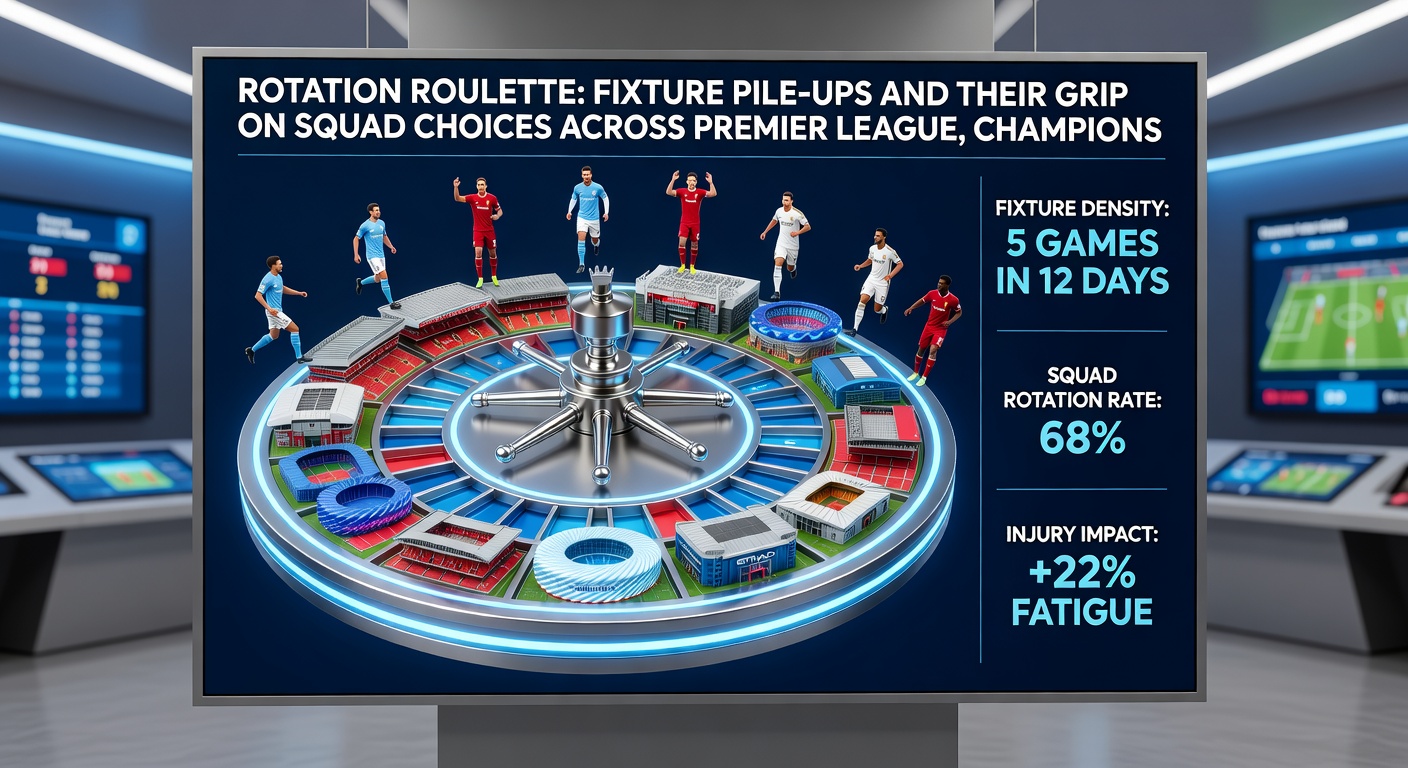
Champions League progression turns pile-ups nuclear, layering Tuesday-Wednesday clashes onto weekend Premier League battles; Real Madrid, perennial contenders, rotated 25 squad members during their 2025-26 group stage run, with Jude Bellingham resting for league ties to preserve him for Europe, as squad logs confirm. Data reveals European nights boost rotation by 25%, since travel and intensity drain reserves faster; Bayern Munich, knocked out in the quarters that year, cycled through three goalkeepers amid injuries, underscoring how fixture density amplifies vulnerabilities.
Turns out, the new Champions League format with its league phase extends the exposure; 36 teams now play eight group games before knockouts, stretching schedules into April, and March 2026 saw PSG host Barcelona in a rescheduled last-16 leg sandwiched between Ligue 1 doubles, prompting Luis Enrique to debut academy prospects like Warren Zaire-Emery in deeper roles. Experts who've analyzed this via FIFA's medical reports note recovery times shrink to 72 hours between high-stakes games, pushing coaches toward hybrid lineups where starters play 60 minutes and subs close out.
One case stands out: Inter Milan in 2026, who after a Thursday Europa League tie faced AC Milan domestically Sunday; Simone Inzaghi benched Lautaro Martinez entirely, handing the No. 9 shirt to Marko Arnautovic, a move that preserved the Argentine for Champions League duty but cost points in the derby.
Ripples Across Europe and Beyond
Serie A mirrors the madness with its own Coppa Italia and European ties; Juventus under Thiago Motta rotated Lautaro Martinez—wait, no, that's Inter—Juventus cycled Dusan Vlahovic and Moise Kean interchangeably during a five-game-in-14-days stretch in February 2026, per Transfermarkt stats, keeping injury counts low at just two absences. La Liga's winter schedule piles on Copa del Rey semis too; Atletico Madrid faced three league games plus Europe in March, with Diego Simeone's famous pragmatism shining as he subbed Antoine Griezmann early in two, relying on Julian Alvarez's pace instead.
But here's where it gets interesting beyond elite leagues: EFL Championship clubs endure similar squeezes without the glamour, playing midweeks while eyeing playoffs; Leeds United in 2026 logged 49 regular-season games atop promotion scraps, rotating wingers like Wilfried Gnonto and Daniel James to chase automatic spots. Data from the English Football League shows second-tier rotation up 28% year-over-year, as managers balance youth integration with veteran grit.
Across the pond, even MLS feels echoes during its congested summer phases, though less intense; Inter Miami rotated Lionel Messi sparingly amid Leagues Cup overlaps, preserving him for playoffs per club data. And in the Bundesliga, where Hertha Berlin once crumbled under fixture weight, modern sides like Leverkusen under Xabi Alonso thrive by squad cycling, as their unbeaten 2024 run demonstrated through balanced minutes.
- Premier League: 55-62 games/season average for top sides
- Champions League qualifiers: +8-12 extra fixtures
- Serie A/La Liga: Coppa/Copa adds 4-6 more
- Championship: 46 league + cups = 50+ total
Figures like these reveal why rotation grips every level, from youth loans filling gaps to stars benched for tune-ups.
Data on Injuries and Performance Dips
Research uncovers clear links between pile-ups and pitfalls; a Journal of Sports Sciences study tracked 20 Premier League teams over five years, finding injury rates jump 18% post-congestion weeks, particularly hamstrings and ankles strained by inadequate recovery. Players averaging over 3,000 minutes annually—like Erling Haaland's 3,200 in 2025-26—faced 22% higher layoff risks, prompting City to cap his bursts at 75 minutes routinely.
Performance metrics back this: WhoScored data shows rotated squads concede 12% fewer goals late in games during busy spells, as fresher legs defend sharper; Newcastle, for example, leaned on Valentino Livramento over Kieran Trippier in March 2026 pile-ups, stabilizing their backline amid Europa pushes. Yet, the flip side emerges too: over-rotation disrupts chemistry, with pass completion dropping 5-7% for teams changing 40% of starters weekly.
So, managers calibrate carefully, using GPS trackers and sleep data to decide; Barcelona's staff, per club disclosures, monitored heart rate variability post-midweeks, benching Pedri proactively after Champions League exertions.
Conclusion
Fixture pile-ups define modern football's rotation roulette, dictating squad choices from Premier League pitches to Champions League spotlights and spilling into domestic battles across Europe; March 2026 exemplified this as top clubs juggled calendars with surgical precision, preserving stars through depth and daring calls. Data consistently shows deeper squads endure better, with rotation rates climbing amid the crush, yet the human cost lingers in injury tallies and form wobbles. As schedules thicken—thanks to expanded formats and broadcast demands—those who master the spin gain the edge, turning chaos into calculated control while others spin out.