Referee Rotation Patterns: Assigning Officials to Tweak Over-Card Lines in Midweek European Ties
Written by Avery Bennett · May 21, 2026
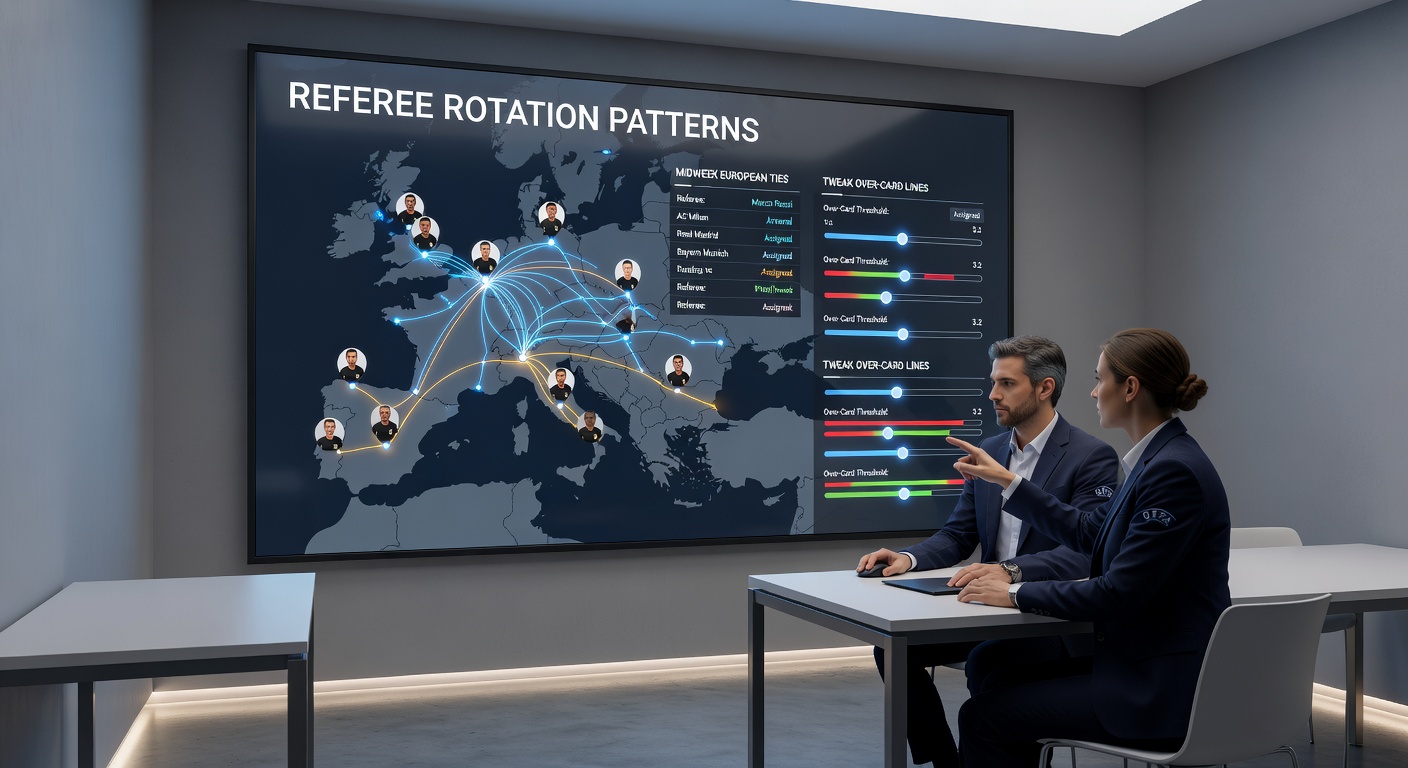
Referee Rotation Patterns: Assigning Officials to Tweak Over-Card Lines in Midweek European Ties
European football competitions rely on structured referee rotation systems that assign match officials across midweek ties in the Champions League, Europa League, and Conference League; these patterns have drawn attention for their correlation with card statistics and over-card betting lines. Observers note that UEFA and domestic leagues coordinate assignments to balance experience levels while distributing workload among elite referees from multiple nations. Data from recent seasons shows average card counts fluctuate based on referee nationality, prior match exposure, and fixture congestion during spring schedules.
How Rotation Systems Operate in Practice
UEFA maintains a pool of approximately 100 elite referees who receive appointments on a rotating basis, with officials rarely handling consecutive matches involving the same clubs or regions. This approach reduces familiarity bias and introduces variety in enforcement styles that directly affect yellow and red card totals. Researchers from the European Club Association have tracked these assignments and found that referees from stricter leagues such as those in Germany and Italy issue higher card averages when placed in physically intense midweek encounters.
Domestic federations supply additional officials for early qualifying rounds and group stage games, yet the knockout phases feature more international mixing. In May 2026, as the 2025/26 campaign reaches its climax, rotation schedules intensify because of overlapping league and European commitments that stretch official availability. Figures reveal that referees typically officiate no more than two European matches per month during this period, a limit designed to preserve decision quality.
Card Statistics and Midweek Patterns
Statistical analysis of over-card markets demonstrates measurable shifts when certain referees receive midweek European assignments. Matches involving officials who average 5.2 cards per game in their domestic leagues often produce totals exceeding the 4.5 line at higher rates than fixtures with more lenient referees. Yet patterns also depend on team styles, with high-pressing sides generating more fouls regardless of the referee on duty.

But here's the thing: travel and recovery considerations enter the equation because referees themselves rotate across time zones and climates. Studies indicate that officials flying from northern Europe to southern venues show slightly elevated card rates in the opening 30 minutes as they adjust to match tempo. These micro-trends appear consistently in data sets covering the 2023 through 2026 campaigns.
Assignment Criteria and League Variations
UEFA employs a points-based evaluation system that considers fitness tests, decision accuracy, and disciplinary consistency when selecting referees for specific ties. Higher-rated officials receive marquee fixtures, while emerging referees handle lower-profile games that still influence overall card averages across the competition. Domestic leagues in Spain and France apply similar rotation models yet coordinate less closely with UEFA schedules, creating occasional mismatches in enforcement intensity.
One study revealed that when a referee who normally works in the Bundesliga gets assigned to a La Liga side's midweek European match, card totals rise by an average of 0.8 per game compared with matches featuring home-league officials. Such differences matter for over-card lines because betting markets adjust quickly once assignment news emerges. What's interesting is how these patterns repeat across multiple seasons without deliberate manipulation, simply through standard rotation mechanics.
According to reports from the FIFA Refereeing Department, continuous professional development programs emphasize consistency across borders, yet cultural differences in foul interpretation persist. Midweek ties amplify these differences because teams field altered lineups and referees encounter unfamiliar player profiles. Data collected through 2026 shows that semi-final and final stages produce lower card averages overall, partly because rotation places the most experienced officials in those high-stakes encounters.
Impact on Betting Markets and Line Movement
Over-card markets respond to rotation announcements because sharp bettors monitor UEFA referee lists released 48 hours before kickoff. When a known strict official draws a tie between two attacking teams, lines often move toward the over within minutes. Industry organizations such as the European Betting Association have documented how these shifts occur across multiple bookmakers simultaneously, reflecting shared access to the same assignment data.
Yet line movement also incorporates team news and historical head-to-head card totals, creating a layered picture rather than a simple referee-driven effect. Observers note that midweek European fixtures scheduled on Thursdays tend to show slightly higher card rates than Tuesday or Wednesday games, possibly because of extended recovery windows that allow more aggressive pressing. This nuance appears in datasets covering several hundred matches per season.
Conclusion
Referee rotation patterns in midweek European ties follow established procedures that balance experience, workload, and fairness while producing measurable effects on card statistics. These systems operate through points-based evaluations and international mixing that create predictable yet variable outcomes for over-card lines. As the 2025/26 season concludes in May 2026, continued data collection will further clarify how assignment decisions shape disciplinary records across competitions.