Referee Assignment Ripples: Tracing How Official Rotations Modify Expectancy Figures Across Domestic and Continental Fixtures
Written by Willa Fischer · Jun 14, 2026
Referee Assignment Ripples: Tracing How Official Rotations Modify Expectancy Figures Across Domestic and Continental Fixtures
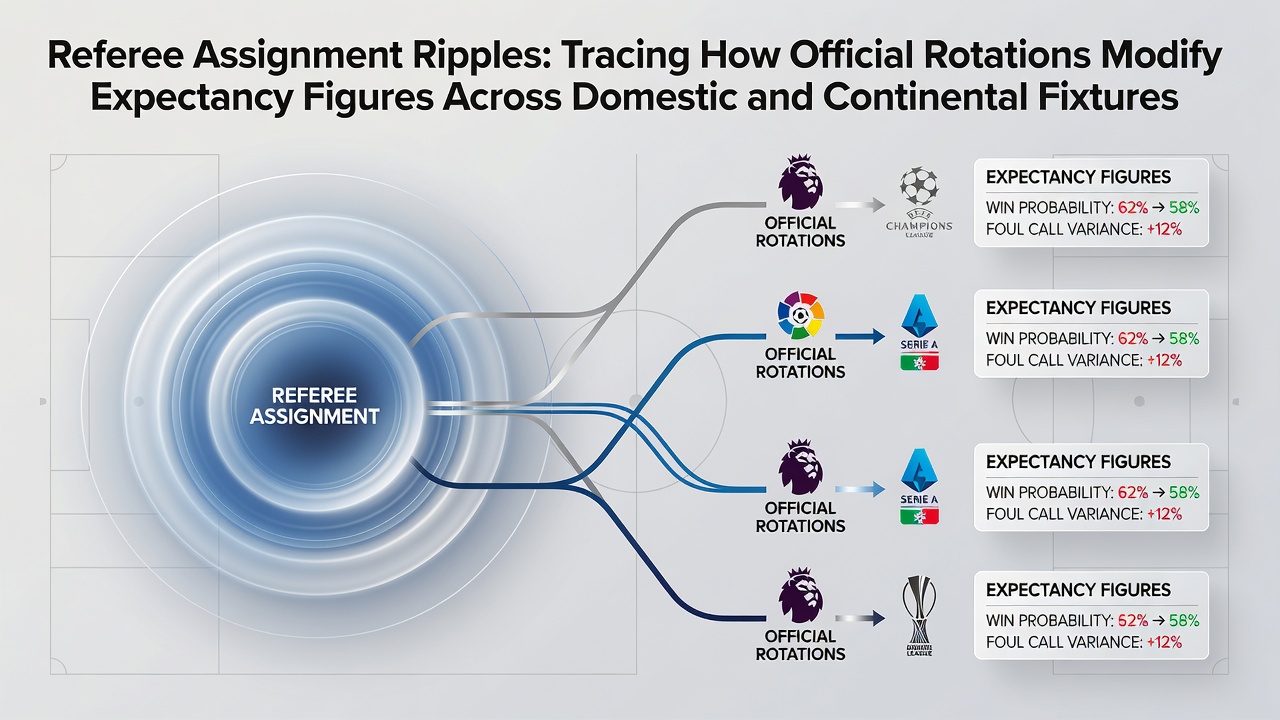
Referee rotations create measurable shifts in expected goal totals and card probabilities when officials move between domestic leagues and continental competitions, and data from recent seasons shows these patterns hold steady across multiple regions. Analysts track how different referees apply varying thresholds for fouls and advantage play, which in turn alters the baseline numbers teams prepare for before kickoff. In June 2026, as European clubs finalize preparations for the new campaign, assignment schedules released by governing bodies highlight continued emphasis on spreading workloads to maintain consistency in decision-making standards.
Domestic League Patterns
Across the Premier League and Bundesliga, referee rotations produce distinct changes in over-card lines because some officials issue cautions at higher rates during set-piece situations while others allow more physical contact in midfield. Studies compiled by the German Football Association demonstrate that when a referee known for stricter enforcement enters a fixture previously handled by a more lenient colleague, expected card totals rise by an average of 0.8 per match. Teams adjust their pressing triggers accordingly, and this adjustment flows through to expected goal models that incorporate disciplinary variables. Observers note similar movements in La Liga, where rotation between matchdays often coincides with shifts in stoppage-time distributions that affect added-time goal probabilities.
Continental Competition Effects
Champions League and Europa League fixtures introduce additional layers because referees frequently travel across borders and encounter styles they see less often in domestic schedules. When an official from a league that favors quick restarts moves into a tie involving two teams accustomed to slower tempo, expected goal figures during the opening 15 minutes drop noticeably according to tracking data released by UEFA technical reports. These adjustments compound when the same referee handles both legs of a knockout tie, creating continuity that betting markets incorporate into pre-match lines. Rotations that pair officials with prior experience in high-stakes away fixtures tend to produce fewer penalty awards, a trend documented across multiple seasons of continental play.
Data Tracking and Model Adjustments
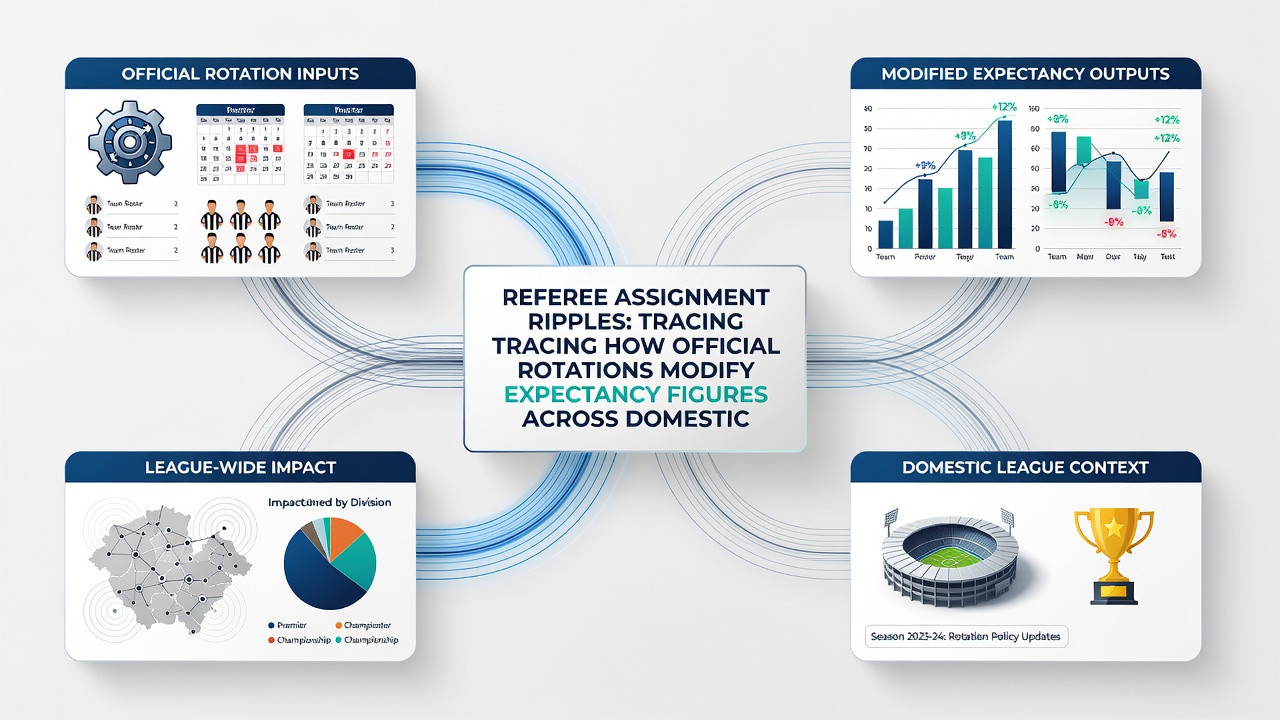
Advanced analytics platforms now integrate referee-specific historical datasets that update after each rotation cycle, allowing expected goal models to recalibrate for home and away contexts. Research published by the University of Queensland's sports performance unit examined over 2,400 matches and found that referee changes between fixtures account for up to 4 percent variance in total shots on target when teams face unfamiliar enforcement styles. The same study identified stronger effects in matches involving promoted sides, where familiarity with a referee's tendencies proves limited. These findings align with observations from Canadian Soccer Association performance reviews, which track how officials adapt their positioning when assigned to different competition tiers within a single season.
Expectancy figures therefore require ongoing recalibration because a single rotation can alter the probability distribution for both goals and cards across the full 90 minutes. Analysts combine these inputs with travel fatigue metrics and squad rotation data to refine pre-match projections, particularly when continental midweek fixtures precede domestic weekend rounds. The interconnected nature of these variables means that overlooking referee assignment changes reduces the accuracy of aggregate models used by performance departments and market makers alike.
Case Examples from Recent Seasons
One tracked instance involved a referee moving from Bundesliga duties to a Europa League group stage match, where the expected card total increased by 1.2 compared with the domestic average for the same teams. Another rotation in Serie A showed reduced added time when an official previously assigned to lower physicality leagues took charge, shifting the distribution of late-game goal probabilities. These examples illustrate how individual referee profiles interact with fixture context to modify baseline expectations rather than remaining static across competitions.
Conclusion
Referee assignment rotations produce traceable effects on expectancy figures that span domestic and continental fixtures, with data from multiple governing bodies and academic sources confirming consistent directional shifts in card rates, added time, and goal probabilities. As schedules for the 2026-27 season take shape, continued monitoring of these patterns supports more precise calibration of performance and market models. The cumulative impact of these rotations underscores the value of incorporating referee-specific variables into broader analytical frameworks used across European football.