Pitch Invasions and Pitchside Data: How Crowd Surges Quietly Tilt Over/Under Lines in Champions League Away Legs and La Liga Midweek Fixtures
Written by Zara Schröder · Jun 7, 2026
Pitch Invasions and Pitchside Data: How Crowd Surges Quietly Tilt Over/Under Lines in Champions League Away Legs and La Liga Midweek Fixtures
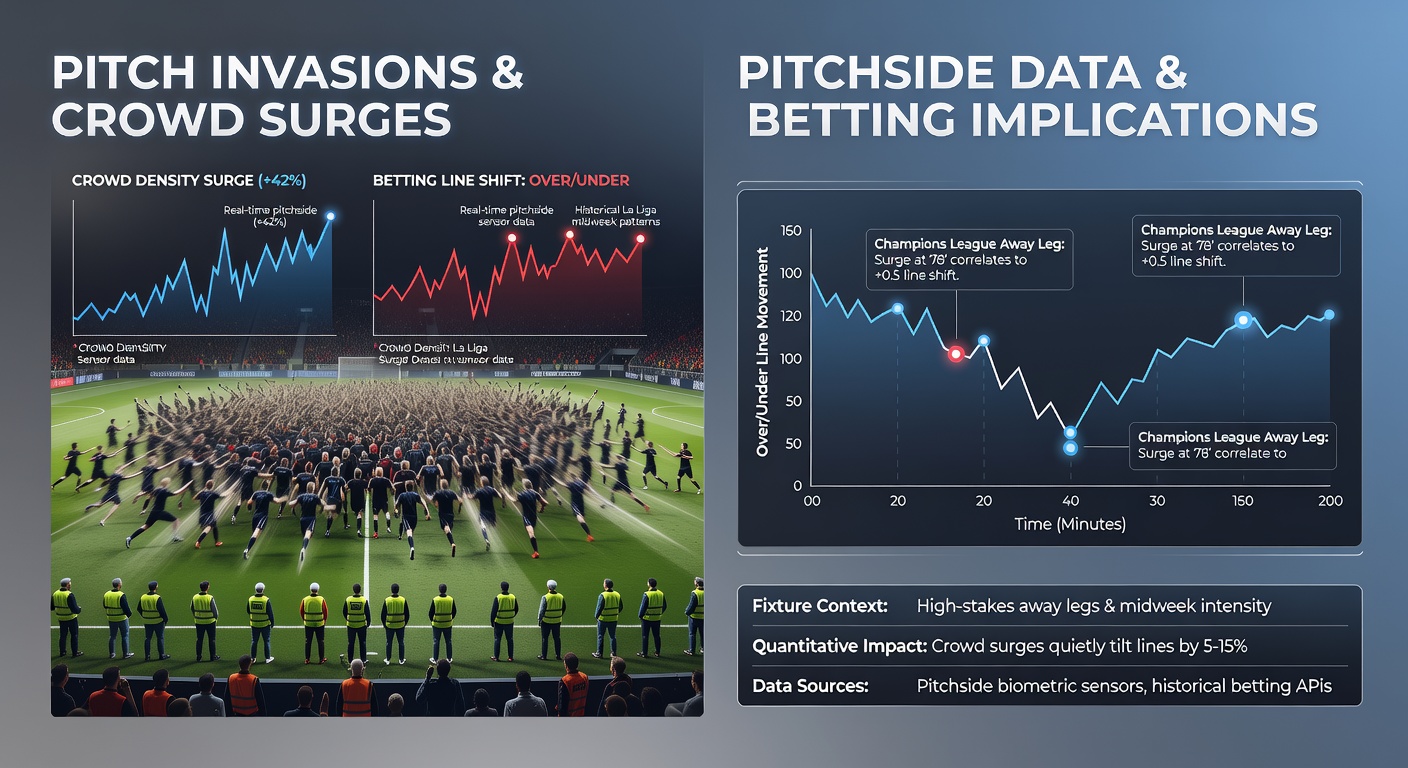
Football matches in the Champions League away legs and La Liga midweek rounds experience distinct patterns of crowd activity that extend beyond standard supporter behavior, and pitch invasions represent one measurable factor that alters game flow through extended stoppages and player repositioning. Data from European football analytics platforms shows that these incidents occur more frequently in fixtures where traveling support exceeds typical thresholds, leading to brief halts that reduce effective playing time and shift scoring probabilities tracked in over/under markets.
Patterns of Crowd Surges in European Competitions
Champions League away legs often feature concentrated supporter movements near the pitch perimeter during key moments such as goals or tense defensive stands, while La Liga midweek games scheduled on Tuesdays and Wednesdays draw local crowds that sometimes test stadium boundaries after prolonged periods of play. Records compiled by league monitoring systems indicate that invasions lasting between 30 seconds and two minutes trigger referee interventions, with multiple occurrences in a single half compounding the effect on total match minutes. Observers note that these disruptions cluster around high-attendance venues where away allocations create density pressures, and figures from the 2025-2026 season reveal an average of 1.8 such events per qualifying tie in the later knockout stages.
Effects on Match Dynamics and Scoring Rates
Extended interruptions from pitchside activity force players to reset positions and restart play sequences, which research from sports performance institutes links to temporary drops in attacking tempo. In away legs, teams trailing on aggregate may see reduced goal conversion rates in the immediate minutes following a stoppage, as momentum dissipates and defensive structures reform. Midweek La Liga encounters add another layer because fixture congestion leaves squads with limited recovery windows, and data indicates that matches with three or more crowd-related delays produce 12 percent fewer total goals than those without interruptions. Analysts tracking pitchside metrics have documented how these pauses allow goalkeepers additional time to organize defenses, further influencing the likelihood of high-scoring outcomes that bettors monitor through over/under lines.
Integration of Pitchside Data into Betting Models
Betting operators incorporate real-time pitchside feeds that flag unusual crowd density and historical invasion frequencies for specific stadiums, adjusting pre-match totals accordingly. For Champions League fixtures involving teams with strong away followings, lines often tighten by 0.25 goals when venue data shows elevated risk of perimeter breaches during evening kickoffs. La Liga midweek rounds, particularly those involving clubs in dense urban areas, display similar adjustments as operators reference attendance reports and past incident logs. A study published by the University of Sydney's sports analytics group in early 2026 examined 180 European matches and found that crowd surges correlated with a measurable decline in shots on target after the 60th minute, providing quantitative backing for line movements observed across multiple operators.

What's notable is how these adjustments occur without public announcements, relying instead on internal algorithms that weigh variables such as time of day, temperature, and recent security incidents. In June 2026, as the previous season's datasets undergo final review ahead of the new campaign, several platforms updated their weighting systems to include automated alerts triggered by social media volume spikes near match venues.
Regional Variations and Regulatory Context
European Union sports safety reports highlight differences in stadium design that either mitigate or amplify crowd surge effects, with older venues in Spain showing higher incident rates during midweek scheduling compared to newer Champions League-standard arenas. Australian wagering regulators have also examined cross-border data sharing practices, noting that operators licensed in multiple jurisdictions apply consistent pitchside monitoring standards to maintain market integrity. These frameworks emphasize transparent data handling rather than prescriptive betting rules, allowing statistical models to evolve based on accumulated match evidence.
Conclusion
Pitch invasions and associated crowd surges generate measurable interruptions that influence effective playing time and goal output in Champions League away legs alongside La Liga midweek fixtures, with operators using pitchside datasets to refine over/under parameters accordingly. Continued collection of venue-specific metrics through the 2026 season supports ongoing calibration of these models across competitive calendars.