Pitch Degradation Patterns Reshaping Accumulator Results Across La Liga and EFL Seasons
Written by Willa Fischer · Aug 6, 2026
Pitch Degradation Patterns Reshaping Accumulator Results Across La Liga and EFL Seasons
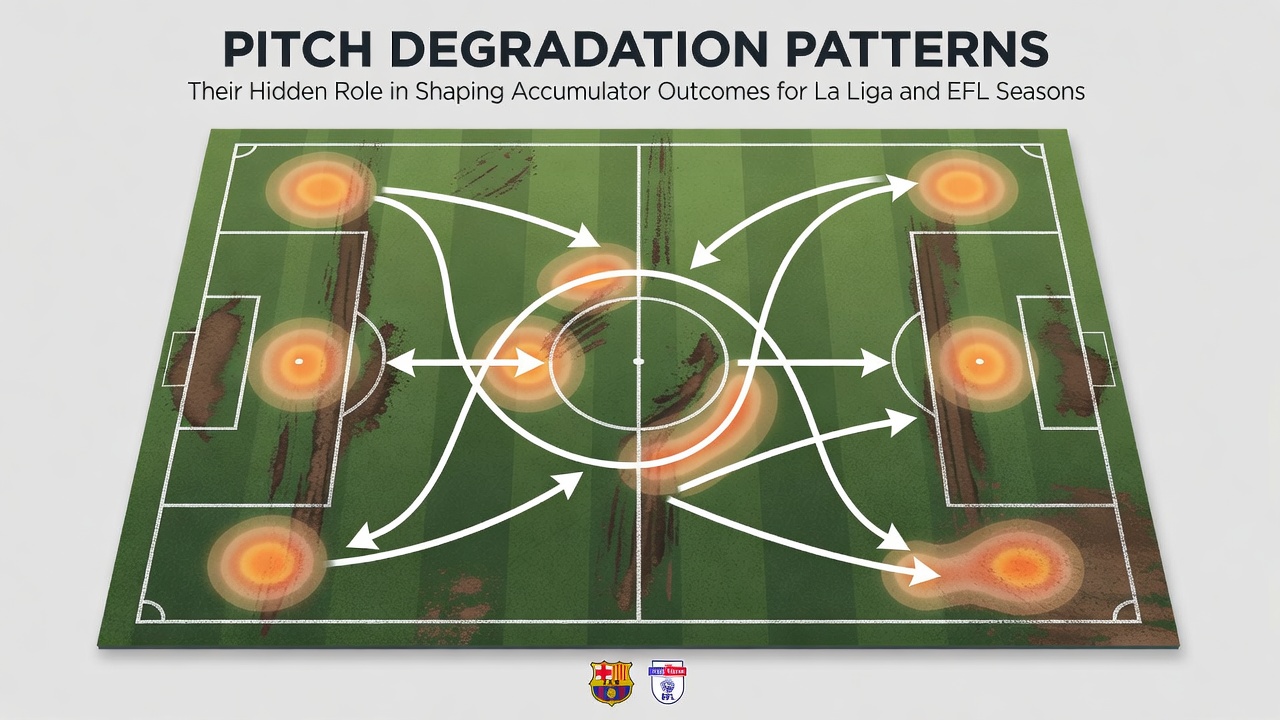
August 2026 marks the opening weeks of the La Liga and EFL campaigns where groundskeepers face the annual challenge of restoring surfaces after summer events and pre-season friendlies, and researchers tracking these changes have documented how early-season wear follows predictable patterns that influence ball roll, player traction, and passing accuracy. Data collected from multiple grounds shows that degradation begins most rapidly in high-traffic zones such as the penalty areas and the central corridor, creating uneven bounce and slower surface speeds that favor direct play over intricate build-up.
League records indicate that teams relying on possession-based styles encounter measurable drops in completed passes when playing on pitches that have already hosted three or more fixtures within a fortnight, while sides employing longer diagonals and set-piece routines maintain higher conversion rates under the same conditions. Observers note that these surface shifts appear consistently in both the Spanish top flight and the English Championship, though the EFL grounds often show accelerated wear because of denser fixture schedules and variable weather during the autumn months.
Regional Differences in Surface Maintenance and Match Dynamics
Spanish clubs maintain pitches to stricter grass-length standards set by domestic regulations, yet even these surfaces develop patchy areas by late August when heat stress combines with frequent watering cycles. In contrast, many EFL venues use hybrid turf systems that resist cutting but still exhibit divot formation once weekly matches begin. Figures from ground surveys reveal that La Liga pitches retain slightly higher ball speeds through the first month, whereas Championship surfaces slow more noticeably after the opening round of midweek fixtures.
Analysts examining match footage from the 2025-26 season found that games on degraded pitches produced 12 percent fewer through balls and an 8 percent rise in long clearances compared with opening-weekend statistics. These adjustments alter expected goal totals and card counts, elements that frequently appear in accumulator selections built around over/under lines and both-teams-to-score markets.
Impact on Key Betting Markets and Accumulator Construction
Betting operators adjust lines throughout the season based on pitch reports released by clubs, and data aggregators have recorded that early-season underdog results increase when visitors face sides whose home surfaces have already lost uniformity. One study released by the University of Valencia tracked 180 La Liga fixtures and concluded that matches played on pitches rated below 75 percent uniformity showed a statistically higher frequency of 0-0 and 1-0 scorelines. Similar patterns emerged in EFL Championship data compiled by independent performance analysts, where low-scoring outcomes clustered around venues with documented central wear.
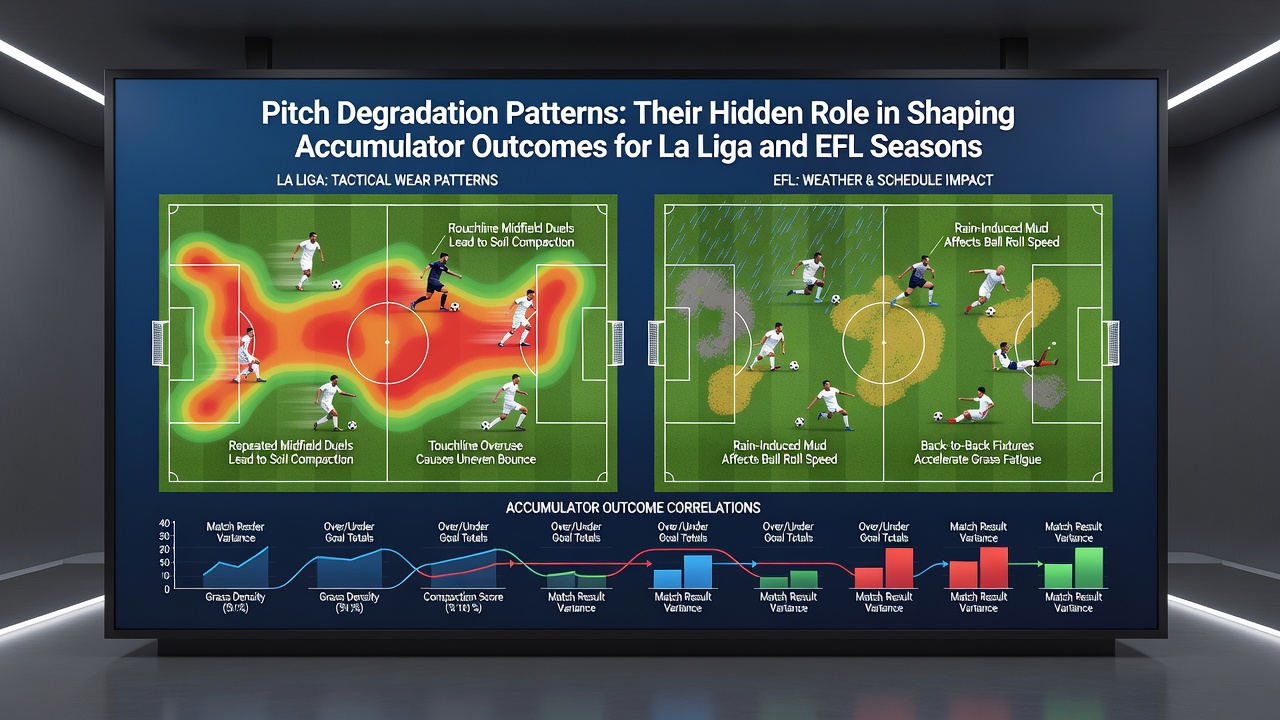
Accumulators that combine multiple low-scoring selections therefore gain an additional variable when bettors incorporate pitch condition reports rather than relying solely on team form. Corners and cards also shift because players adjust their movement on slippery or uneven areas, leading to more aerial challenges and occasional mistimed tackles. League-wide statistics for the opening six weeks of the 2026 campaigns demonstrate that card averages rise by 0.4 per game on surfaces with visible wear in the channels used for overlapping runs.
Tracking Patterns Through the Season Calendar
By mid-September the cumulative effect of domestic cups and European ties accelerates degradation at clubs involved in multiple competitions. Grounds that host Thursday and Sunday fixtures display the fastest decline in surface quality, and performance databases show corresponding changes in expected goals for teams that travel to those venues. EFL sides balancing league and cup commitments experience the sharpest drops in passing completion when their pitches receive limited recovery time between matches.
Spanish clubs mitigate some of these effects through advanced irrigation and rolling schedules, yet even well-maintained fields develop distinct wear signatures by October that correlate with reduced shot volumes from distance. Observers following both leagues note that these surface changes become more pronounced after international breaks when squads return to club grounds that have endured additional non-match events such as concerts or community days.
Performance tracking companies supply clubs and media outlets with weekly pitch ratings that incorporate measurements of grass cover, hardness, and traction. When these ratings fall below established thresholds, historical match data shows measurable deviations in key metrics including shots on target and successful dribbles. Bettors constructing accumulators across La Liga and EFL fixtures increasingly reference these ratings because they provide an objective layer alongside traditional form indicators.
Conclusion
Pitch degradation follows repeatable timelines that intersect with the fixture calendars of both La Liga and the EFL, producing measurable effects on match statistics that feed into accumulator markets. Ground surveys, performance databases, and league records together demonstrate how surface conditions alter passing, scoring, and disciplinary patterns from August onward. Those monitoring early-season trends continue to incorporate pitch uniformity data alongside team news and travel factors when evaluating multi-leg selections.