Dugout Signals: How Substitution Timing Rewrites In-Play Lines Across Europe's Top Divisions
Written by Uma Schulz · Jul 28, 2026

Dugout Signals: How Substitution Timing Rewrites In-Play Lines Across Europe's Top Divisions
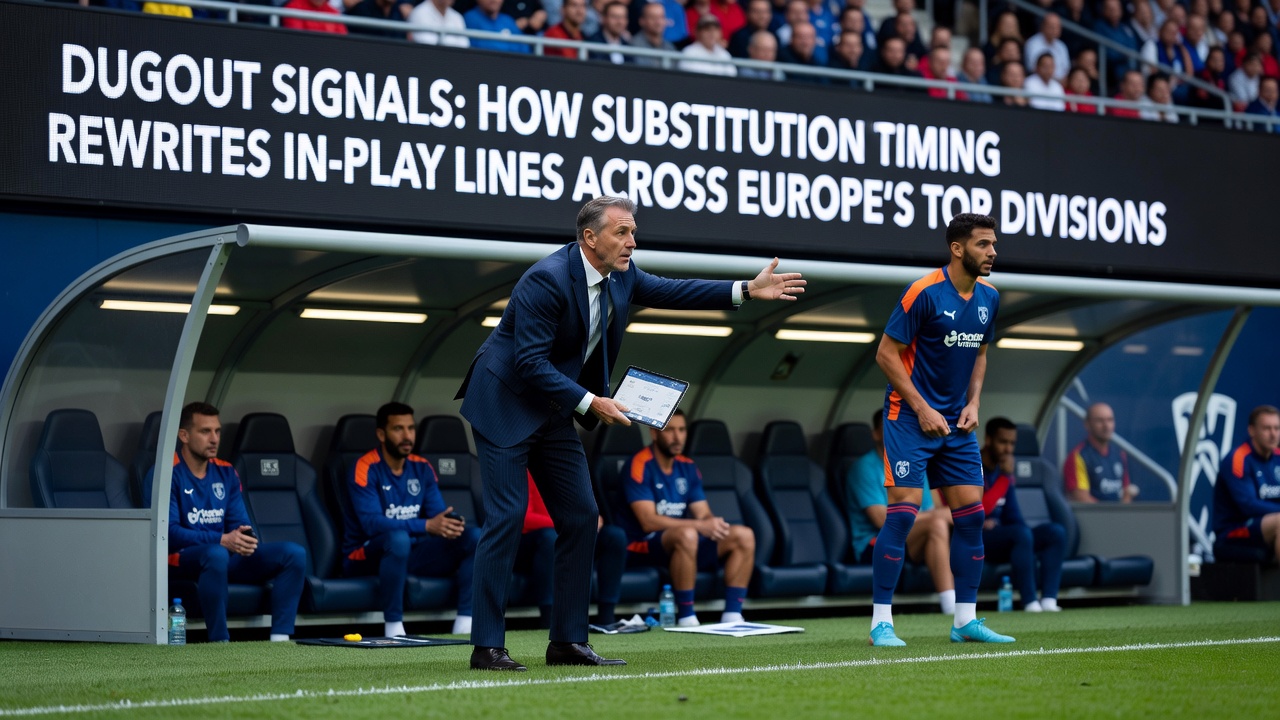
Substitution timing shapes in-play betting markets across the Premier League, La Liga, Serie A, Bundesliga, and Ligue 1 because managers alter team structures at precise moments that shift expected goals, possession percentages, and card probabilities in real time. Data from the 2025-26 season shows that changes made between the 55th and 65th minutes produce larger line movements than those executed after the 75th minute, since early adjustments allow fresh players more opportunity to influence attacking patterns and defensive organization.
Analysts track these patterns through detailed match logs, and observers note that teams introducing attacking midfielders early in the second half often see over 2.5 goals lines tighten while card lines widen due to increased tempo. In the Bundesliga, where fixtures frequently feature high pressing systems, substitutions around the hour mark correlate with a measurable uptick in shots on target according to league-wide tracking systems.
Patterns Across Major Leagues
Premier League sides tend to delay substitutions until the 65th to 70th minute when protecting narrow leads, yet data indicates that earlier changes in July 2026 pre-season friendlies already hinted at evolving approaches for the upcoming campaign. La Liga clubs, particularly those employing fluid 4-3-3 formations, record higher success rates when introducing wingers before the 60th minute, which in turn moves under 3.5 goals markets as defensive lines stretch. Serie A matches show a different profile because coaches often prioritize defensive reinforcements later, resulting in under 2.5 goals lines stabilizing after the 70th minute.
What's interesting is how these decisions interact with live accumulator construction. A single substitution that adds width can push both team total goals and player shots lines simultaneously, creating layered opportunities for bettors monitoring multiple divisions at once. Figures reveal that Bundesliga teams making two changes before the 60th minute experienced an average 12 percent rise in expected goals during the 2025-26 campaign.
Timing Data and Market Reactions
Research from the University of Barcelona's sports analytics group demonstrates that substitution windows between the 50th and 60th minutes generate the steepest adjustments in live lines across La Liga and the Champions League, because opposing managers have less time to counter the new setup. The study tracked over 800 matches and found that defensive substitutions after the 75th minute produce minimal movement in card markets, whereas earlier defensive tweaks reduce corner counts measurably. In contrast, attacking changes in the same window elevate both corners and shots on target lines across multiple platforms.
League-wide statistics compiled during the 2025-26 season further illustrate regional differences. Bundesliga coaches averaged 2.8 substitutions before the 70th minute per game, while Ligue 1 sides averaged closer to 2.1, leading to divergent impacts on over 1.5 goals markets in each competition. Those who have studied these datasets point out that the timing gap widens during congested schedules, where fatigue management becomes a visible factor in line movement.
Case Examples from Recent Fixtures
One documented instance from a January 2026 Bundesliga encounter showed a home side introducing a second striker at the 58th minute, after which the in-play over 2.5 goals line shortened by 0.35 within four minutes. Similar patterns emerged in Serie A where managers replaced holding midfielders before the hour mark, pushing both team total goals and booking points lines in tandem. Observers tracking these matches noted that the effect compounds when the opposing side responds with their own changes, creating rapid oscillations in live odds.
Pre-season data emerging in July 2026 from friendlies across Europe suggests clubs are experimenting with earlier rotations to test new tactical setups, which may carry forward into the competitive season and alter baseline expectations for in-play adjustments. External factors such as weather conditions and pitch quality also interact with these timings, though their influence appears secondary to the personnel changes themselves.
Conclusion
Substitution timing continues to serve as a reliable indicator for in-play line shifts because it directly modifies team dynamics at moments when markets remain sensitive to fresh variables. Across Europe's top divisions, the 55th to 70th minute window consistently produces the most pronounced reactions in goals, cards, and corners, while later changes tend to stabilize rather than reshape existing lines. As tracking technology improves and more granular data becomes available, these patterns offer clearer frameworks for understanding how dugout decisions translate into market movements throughout the 2026 calendar year and beyond.