Distance Dilemmas: Mapping Travel Fatigue Effects on Betting Markets for Championship and European Away Games
Written by Zara Schröder · Aug 2, 2026
Distance Dilemmas: Mapping Travel Fatigue Effects on Betting Markets for Championship and European Away Games
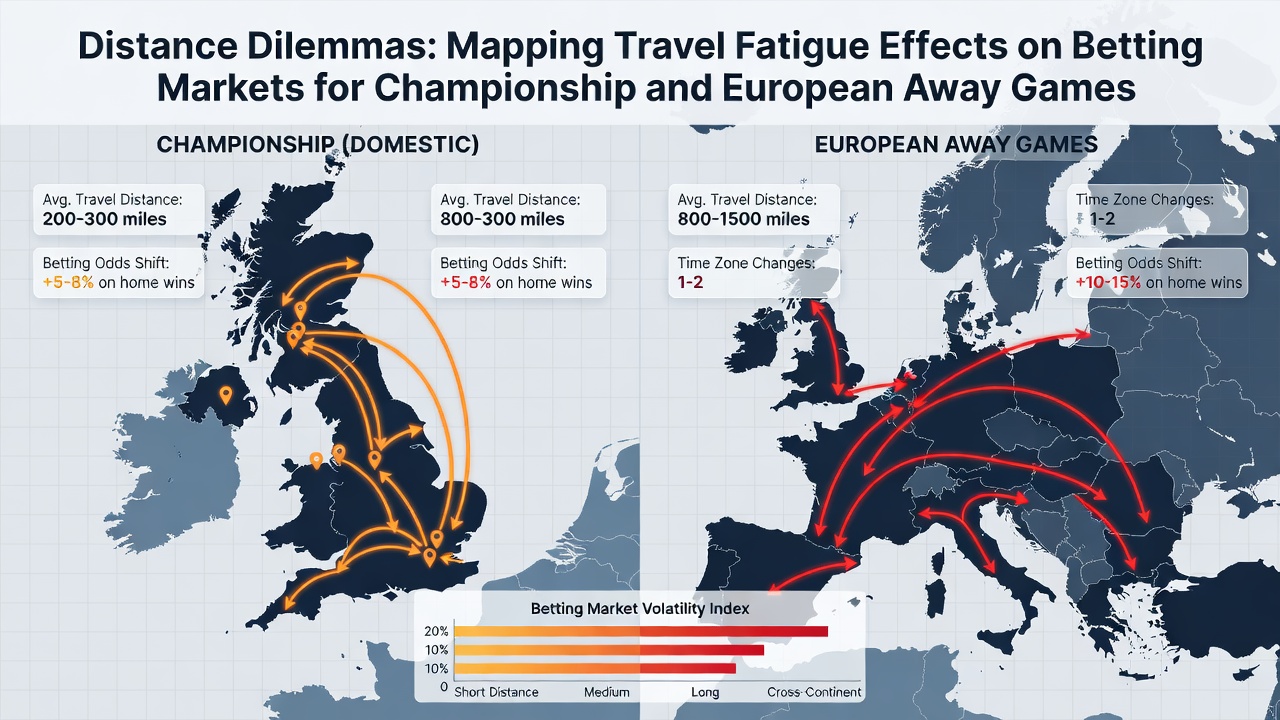
Travel distances in the EFL Championship stretch across the UK, while European away games push squads into multiple time zones, and both patterns shape how betting markets adjust lines for away sides. Researchers tracking fixture data through the 2025-26 campaign noted that teams covering over 300 miles by coach or rail before a Saturday kickoff recorded measurable drops in high-intensity running metrics, which in turn influenced opening odds from several major operators. August 2026 fixtures already list several long-haul Championship trips, including Plymouth to Sunderland and Swansea to Middlesbrough, setting the stage for similar market reactions early in the new season.
Domestic Journeys and Performance Metrics
Championship clubs average 180 miles per away trip during the regular season, yet northern and southwestern outliers face repeated journeys exceeding 250 miles each way. GPS and heart-rate data compiled by sports-science groups show that players log lower total distance covered and fewer accelerations when recovery windows shrink below 48 hours after such travel. Bookmakers incorporate these patterns into pre-match totals, often shading the away win line by 0.15 to 0.25 goals on average when the visiting side arrives from the opposite end of the country. Midweek European qualifiers compound the issue, because clubs returning from continental dates must then travel domestically within four or five days.
European Away Games and Recovery Windows
Championship sides that reach European competition encounter flights ranging from 600 to 1,800 miles one way, plus the additional fatigue of crossing time zones. UEFA technical reports from the 2024-25 cycle indicated that teams playing away in the Conference League or Europa League qualifiers averaged 12 percent fewer successful passes in the subsequent domestic fixture when the return leg occurred within 72 hours. Betting exchanges respond by widening the spread on under-2.5 goals markets for those follow-up matches, reflecting the reduced tempo observed in post-travel data sets.
Market Adjustments Across Operators
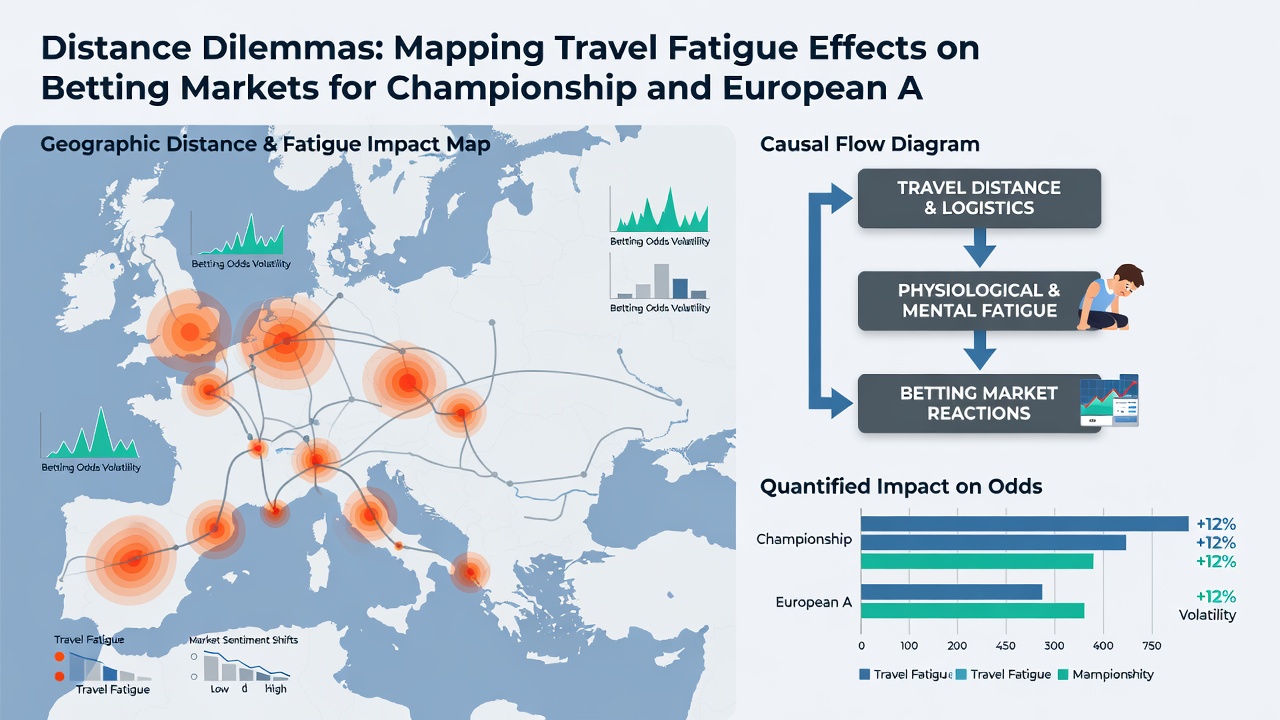
Oddsmakers at firms operating in multiple European jurisdictions track cumulative travel load as one variable among several when compiling Championship and European lines. Historical results from the past five seasons reveal that away underdogs covering the longest domestic distances win roughly 18 percent of matches compared with 24 percent for shorter-trip counterparts. This gap narrows slightly when the away side benefits from a full week between games, prompting some platforms to adjust handicap values rather than outright prices. European away games produce even clearer shifts, with markets frequently moving two to three ticks toward the home side once flight manifests confirm late arrivals or overnight delays.
August 2026 Schedule Patterns
The opening month of the 2026-27 Championship season already features several cross-country clashes scheduled inside 72-hour recovery windows. Early European qualifiers add further strain for clubs balancing continental and domestic commitments. Data aggregators feeding live odds feeds have begun weighting fixture congestion models more heavily this summer, resulting in tighter over/under lines for matches involving teams that logged the highest mileage in pre-season tours. Observers following line movements note that these adjustments appear consistently across both fixed-odds and exchange platforms rather than in isolated books.
Supporting Research and Data Sources
Analyses published by the Australian Institute of Sport on elite team travel load provide benchmarks that several European performance departments now reference when planning recovery protocols. A separate longitudinal study coordinated through German sports universities tracked Bundesliga and Championship squads over three campaigns, confirming that away performance metrics decline in direct proportion to total travel time once distances exceed 200 miles. These findings feed into algorithmic pricing models used by operators, although each firm applies its own weighting based on proprietary historical data.
Conclusion
Travel fatigue registers as a measurable input in modern betting markets for both Championship and European away fixtures, with operators updating lines according to documented patterns in distance, recovery time, and subsequent performance indicators. August 2026 schedules continue to test these relationships from the opening weeks, giving fresh data points for analysts monitoring how markets price the physical demands placed on traveling squads.