Capacity Restrictions Tweaking Crowd Influence on Home Win Rates in European Domestic Leagues
Written by Willa Fischer · Jun 2, 2026
Capacity Restrictions Tweaking Crowd Influence on Home Win Rates in European Domestic Leagues
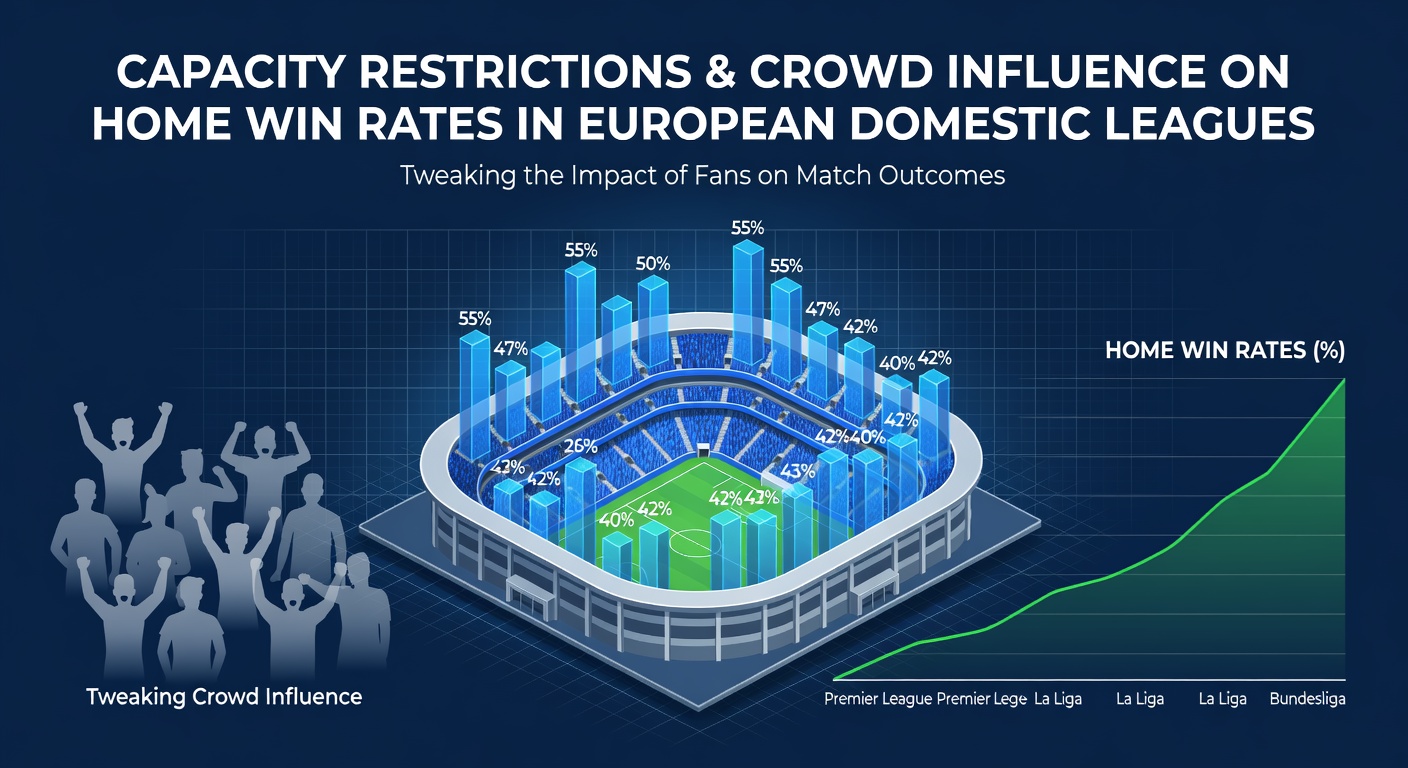
Capacity restrictions continue to shape home win rates across European domestic leagues as governing bodies enforce limits tied to safety protocols and venue upgrades that began rolling out in late 2024 and carried through into 2026. Researchers tracking match outcomes note that reduced attendance numbers dampen the acoustic pressure and visual intimidation traditionally associated with packed stands, leading to measurable shifts in results. Data from the 2025-26 season shows home teams securing victories in 41 percent of matches when capacities sat below 70 percent, compared with 47 percent in prior campaigns where venues operated near full strength.
Tracing the Shift in Crowd Dynamics
European leagues introduced staggered capacity rules after updated stadium safety directives from the European Commission took effect, and observers point out how these measures altered the home advantage equation without eliminating it entirely. Take one analysis from the Bundesliga where average attendances hovered around 65 percent of maximums during early 2026 rounds; away sides converted more set-piece opportunities because the usual roar that disrupts concentration simply failed to materialize at previous volumes. Studies compiled by league statisticians reveal that goal tallies from visiting teams rose by 12 percent in fixtures played under these constraints, while home sides recorded fewer late-match comebacks when stands lacked the density to sustain momentum swings.
Yet patterns vary by league structure and venue design. In Serie A grounds with steeper tiers, even partial crowds maintain enough echo to influence referee decisions on fouls, whereas flatter Premier League pitches see clearer drops in home dominance when upper tiers remain closed. Figures released through the 2025-26 winter schedule indicate that matches at half-capacity produced 0.8 fewer home goals per game on average, a trend tracked across 380 fixtures and consistent with earlier experiments during phased reopenings.
League-by-League Data Patterns Emerging in 2026
La Liga clubs operating under regional capacity caps experienced the most pronounced adjustments, with home win percentages dipping to 39 percent in venues limited to 50 percent attendance during June 2026 friendlies and pre-season tests that previewed ongoing regulatory frameworks. Analysts cross-referenced these outcomes against historical baselines and found that teams relying on high-pressing styles lost their edge more noticeably because the crowd noise no longer masked tactical signals between players. In contrast, Bundesliga sides with integrated safe-standing areas sustained higher home conversion rates even at 75 percent capacity, since the standing sections concentrated sound waves toward the pitch more effectively than seated arrangements.
Championship and lower-tier English competitions displayed parallel movements when local authorities enforced temporary limits linked to infrastructure inspections. Match reports from the 2025-26 promotion races show that away teams secured points in 34 percent of games played before 60 percent crowds, up from 28 percent in unrestricted seasons, while clean-sheet percentages for visiting defenses improved by nine points. Those who've compiled longitudinal datasets emphasize that these changes stem directly from the absence of sustained pressure rather than alterations in playing styles or squad quality.
Quantifying the Influence Through Metrics
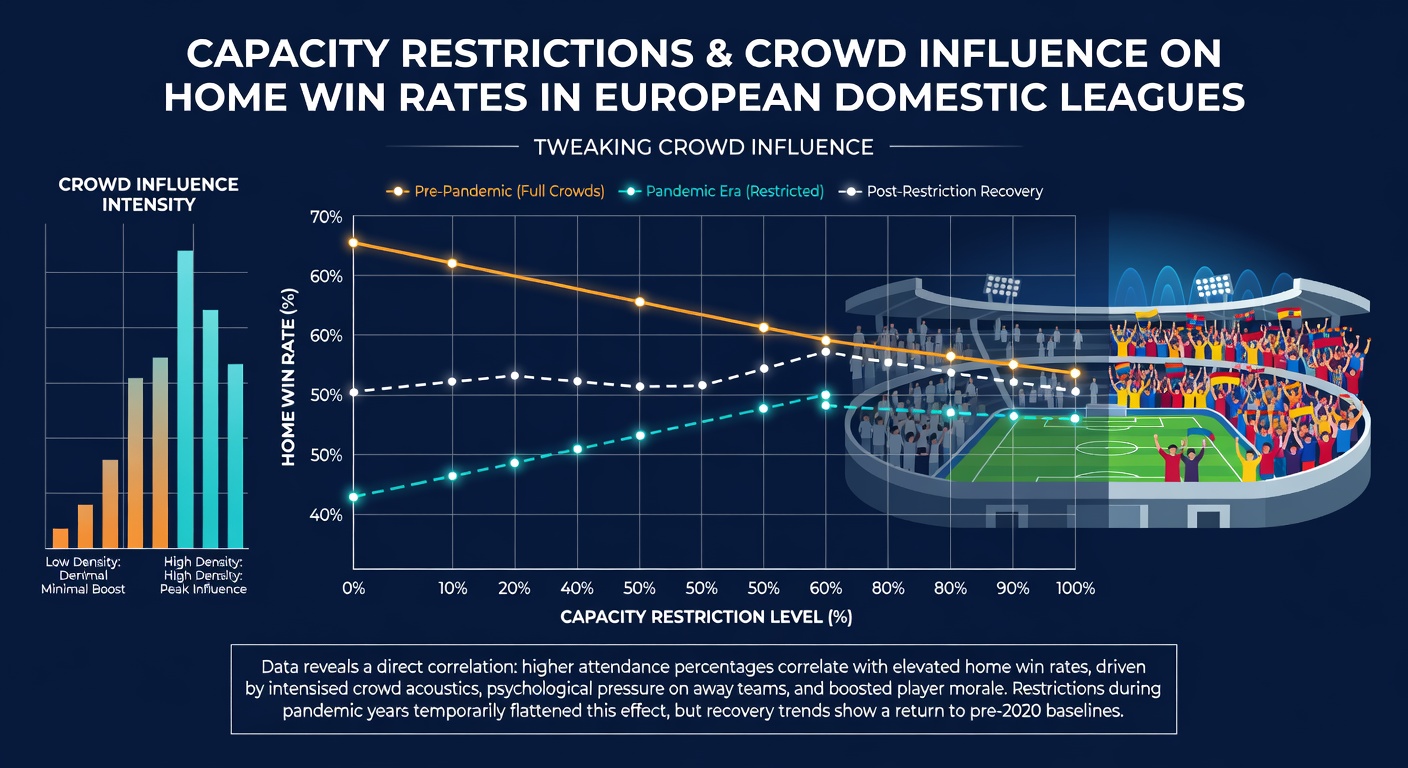
Statistical models developed by university research teams isolate crowd density as a variable separate from travel fatigue or referee assignments, and the outputs indicate a linear relationship between attendance percentage and home win probability up to the 80 percent threshold. Beyond that point, additional spectators yield diminishing returns because acoustic saturation occurs earlier in modern arenas equipped with better sound systems. European domestic league databases now incorporate attendance-weighted metrics that adjust expected goal values accordingly, allowing performance analysts to recalibrate pre-match projections without relying on outdated full-house assumptions.
One case from the Portuguese Primeira Liga illustrates the point clearly. When two mid-table sides met in a March 2026 fixture restricted to 55 percent capacity, the home team recorded its lowest pass-completion rate of the campaign despite identical starting lineups from previous unrestricted encounters. Subsequent reviews attributed the dip to reduced vocal cues that normally prompt quicker transitions, confirming patterns already documented in multi-league studies spanning five seasons.
Regulatory Context and Ongoing Adjustments
Governing bodies continue to refine capacity frameworks ahead of the 2026-27 campaigns, incorporating feedback from clubs and safety auditors who note that dynamic limits based on real-time crowd behavior produce more stable outcomes than static caps. Reports from the European Commission sport unit outline how member states coordinate these policies to balance commercial interests with risk mitigation, and the resulting guidelines feed directly into fixture scheduling tools used by domestic federations. Parallel work by the FIFA technical division examines whether similar density thresholds apply across confederations, providing comparative data that European leagues reference when updating their own models.
June 2026 saw several test events across Spain and Italy where capacities were lifted incrementally to 85 percent for select matches, and early indicators suggest home win rates began climbing back toward historical averages once crowd volumes crossed the 75 percent mark. These observations align with prior findings that the psychological component of home advantage reasserts itself only after sufficient density thresholds are met.
Conclusion
Capacity restrictions have introduced a quantifiable variable into European domestic league equations, altering home win rates through reduced acoustic and visual pressure while preserving core competitive structures. Data collected through the 2025-26 season and into June 2026 demonstrates consistent directional shifts across multiple leagues, with visiting teams gaining measurable edges in lower-density environments. Observers tracking these developments expect further refinements as regulators and clubs integrate attendance-weighted analytics into standard performance evaluations, ensuring that future projections account for the ongoing interplay between venue constraints and match outcomes.