Atmospheric Changes Reshaping Scoring Dynamics in EFL Promotion Contests and La Liga Weekday Games
Written by Uma Schulz · Jul 16, 2026

Atmospheric Changes Reshaping Scoring Dynamics in EFL Promotion Contests and La Liga Weekday Games
Weather patterns have long influenced football matches across Europe, and recent shifts in wind combined with rain delays continue to alter expected goal totals in the English Football League promotion battles alongside La Liga midweek schedules. Data from meteorological agencies shows that gusts exceeding 25 kilometers per hour often reduce average goals per game by disrupting long passes and set-piece accuracy, while precipitation slows ball movement on natural grass surfaces common in both leagues.
Teams chasing promotion in the EFL Championship and League One have adjusted training regimens to account for these variables during the 2025-2026 campaign. Observers note that clubs like those in the upper playoff positions frequently review wind forecasts from the Met Office when preparing for away fixtures at exposed grounds, where crosswinds can push shots wide or alter goalkeeper positioning. In parallel, La Liga sides facing midweek commitments after international windows encounter similar recalibrations, as rain delays extend warm-up periods and force tactical tweaks toward shorter passing networks rather than aerial routes.
Wind Effects on Ball Trajectory and Team Strategies
Strong prevailing winds change the physics of flight paths for crosses and shots, leading analysts to document measurable drops in conversion rates from set pieces. Research published through the European Centre for Medium-Range Weather Forecasts indicates that tailwinds can extend ball travel by up to 10 percent, yet headwinds compress distances and increase defensive clearances. Promotion-chasing sides in the EFL respond by emphasizing ground-based combinations during such conditions, which in turn lowers projected goal outputs compared to calm-weather baselines. Midweek La Liga encounters, often played under floodlights with variable coastal breezes, show parallel patterns where teams shift from high crosses to low-driven attempts to maintain control.
Coaches across both competitions compile historical match logs that pair wind speed readings with final scores, revealing consistent underperformance against pre-match goal lines when gusts intensify. This approach allows squads to recalibrate expectations without relying on subjective assessments, instead using objective velocity data gathered from stadium sensors.
Rain Delays and Pitch Condition Impacts
Extended rain interruptions create heavier pitches that favor defensive setups over attacking transitions, a factor documented in multiple league reports throughout the current season. Water accumulation reduces friction, causing the ball to skid unpredictably and increasing turnovers in midfield zones. EFL promotion contenders, many of whom play on lower-budget grounds with less advanced drainage, experience these effects more acutely during weekend-to-midweek turnarounds. La Liga fixtures scheduled midweek after continental commitments face comparable challenges when showers coincide with fixture pile-ups, prompting groundskeepers to deploy absorbent materials that only partially mitigate the slowdown.
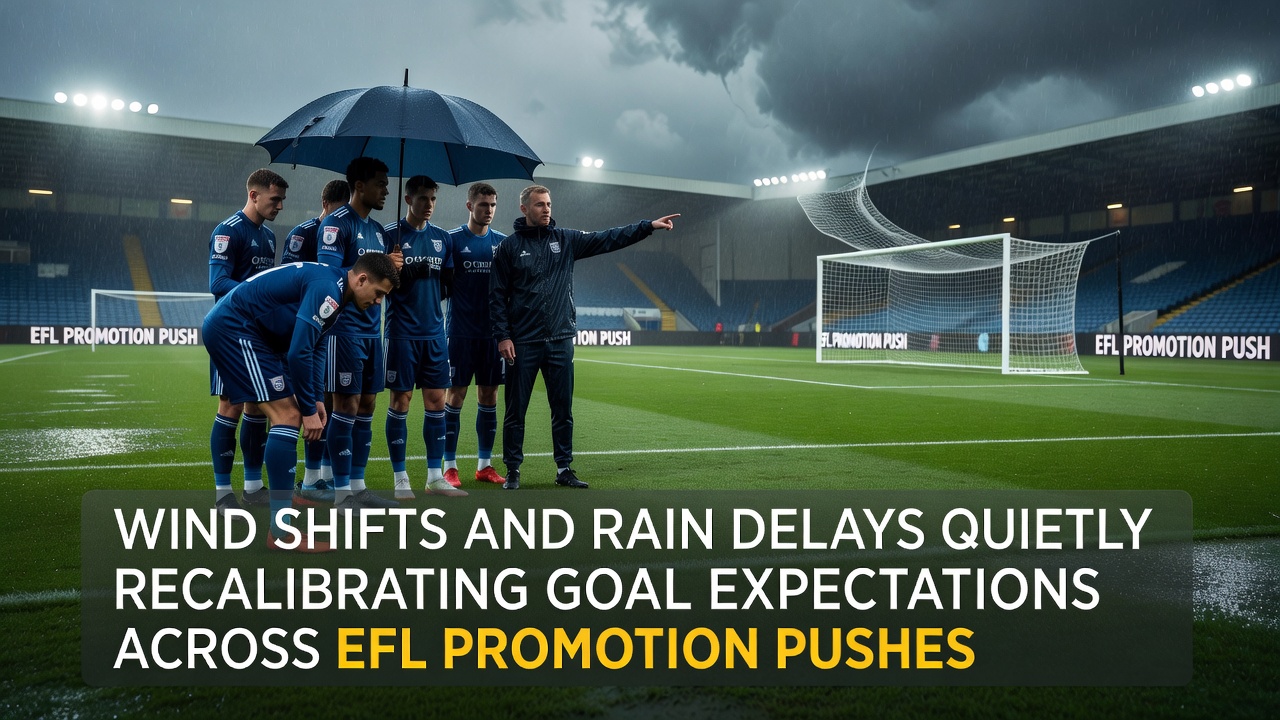
Statistical reviews from the Spanish Football Federation highlight that matches resumed after 30-minute delays average 0.4 fewer goals than uninterrupted contests, attributed to altered footing and cautious player behavior. Promotion pushes in England mirror this trend, where rain-affected games produce tighter scorelines and fewer open-play opportunities, particularly in the final third of the season when stakes rise.
July 2026 Preparations and Pre-Season Adjustments
Preparations for the 2026-2027 campaigns began in July 2026 with clubs incorporating weather simulation into pre-season schedules. Training camps in both England and Spain now feature portable wind machines and irrigation systems to replicate match-day variables, allowing squads to test formation changes under controlled conditions. League officials note that these drills help normalize goal expectation models ahead of the opening fixtures, reducing the shock factor when real atmospheric shifts occur. Data compiled during these sessions shows improved player adaptation rates, with teams recording higher pass completion percentages in simulated rain compared to previous years.
International bodies such as the Union of European Football Associations have issued guidelines encouraging clubs to integrate meteorological briefings into weekly planning, particularly for midweek travel across regions prone to sudden showers. This practice extends to EFL sides navigating promotion battles, where schedule density amplifies exposure to variable British weather systems.
League-Specific Patterns and Statistical Trends
Comparative studies of goal distributions reveal distinct responses between the two leagues. EFL promotion matches exhibit sharper declines in total goals during windy periods because of the physical, direct style prevalent in lower divisions, whereas La Liga encounters maintain slightly higher averages due to technical emphasis on possession retention even in adverse conditions. Figures released by the National Oceanic and Atmospheric Administration on European weather correlations support these observations, linking specific wind vectors to reduced scoring in northern latitudes where many EFL grounds sit.
Academic analyses from institutions including the University of Barcelona further demonstrate that rain delays correlate with increased yellow card counts, as players adapt footing and commit more fouls in slippery areas. Such secondary effects indirectly influence goal tallies by altering game tempo and prompting substitutions earlier than planned.
Conclusion
Wind shifts and rain delays continue to recalibrate goal expectations through measurable impacts on play styles, pitch surfaces, and tactical decisions in EFL promotion pushes alongside La Liga midweek fixtures. Clubs and analysts rely on integrated weather and performance data to refine projections, ensuring preparations reflect actual conditions encountered during the season. These atmospheric factors remain integral to match outcomes across both competitions, shaping strategies without altering the fundamental competitive structures.